
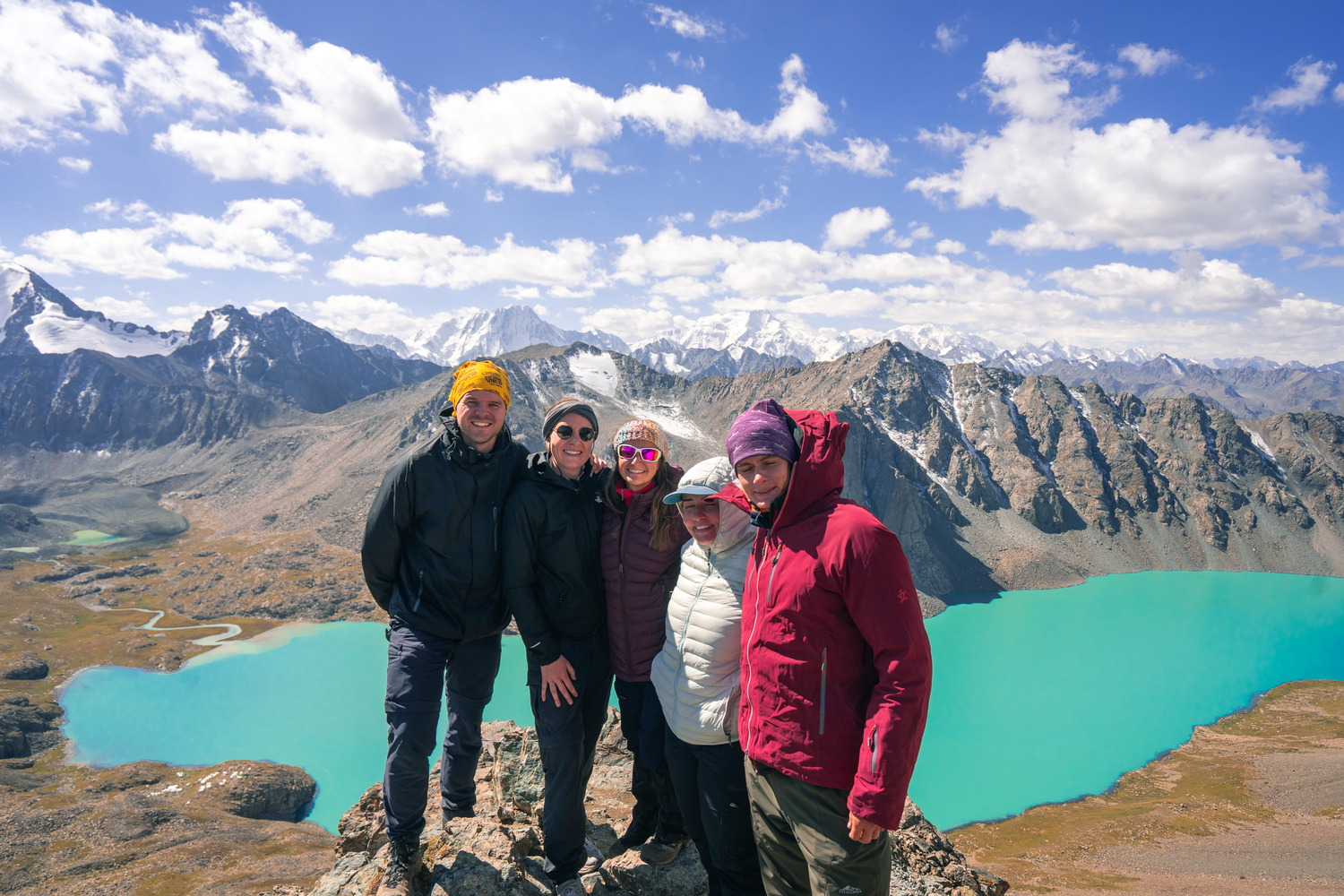
Over the years, Ala-Kul Lake has become one of Kyrgyzstan’s most iconic trekking destinations, drawing hikers from around the world. The classic three-day Ala-Kul trekking circuit takes adventurers through dramatic alpine valleys, over nearly 4,000-meter-high mountain passes, and ends with a well-earned soak in the natural hot springs of Altyn Arashan.
If you’re planning to hike in Kyrgyzstan, here’s our ultimate guide to trekking the Ala-Kul Lake Circuit with everything you need to know for an unforgettable adventure.

How about those stats?
Summarising the Ala-Kul Circuit in numbers:
Daily Breakdown
Day 1: Karakol Valley - Sirota Camp
Distance: 12.5km | Elevation: +893m / -56m
Time: 4-6 hours
Day 2: Sirota Camp - Altyn Arashan
Distance: 15.0km | Elevation: +1049m / -1476m
Time: 8-10 hours
Day 3: Altyn Arashan - Ak-Suu Resort
Distance: 14.7km | Elevation: +250m / -888m
Time: 3-5 hours
Where to begin the hike?
If you’re planning to hike the Ala-Kul Lake Circuit, your adventure will almost certainly start in Karakol. This little mountain town is the beating heart of trekking in Kyrgyzstan. A place where backpackers, mountaineers, and wanderers are constantly coming and going. If you’re traveling solo, it’s one of the best spots to link up with fellow hikers who are also gearing up for the Ala-Kul trek.
Looking for a place to stay in Karakol?
When it comes to finding a place to stay, we can’t recommend Snow Leopard Hostel enough. Tucked inside a cozy, guesthouse-style building, it has the kind of warm, welcoming vibe that makes you feel at home straight away. The owners, Jalil and Aizada, are incredibly friendly and they have a wealth of knowledge about everything in and around Karakol. They can help you sort out guides, transport, and any last-minute logistics so you can enjoy the trail.
How fit do I need to be?
Well isn't that the million dollar question....
There's no denying that the Ala-Kul Circuit is strenuous. But just how strenuous is it?
There is almost 2000 meters of elevation gain in the first (or last) 2 days and a total of 42km hiking. So you must be able to be comfortable walking for up to 8-10 hours as the second day is long and has over 1000 meters of elevation gain.
If you have a baseline level of physical fitness and experience with overnight treks before then we think you should be fit enough for the hike. Sleeping in yurts helps massively with reducing pack weight and getting a comfortable night sleep and hot meals to prepare for long days on trail.
We strongly recommend starting the second day as early as possible to avoid arriving late and walking in the dark. Trust me, it's not so enjoyable. Plus, if you're on Ala-Kul Pass before midday the skies will likely be much clearer.
Is it best to start in Karakol Valley or Ak-Suu?
Well, this is a question that splits decision, both directions have their pros & cons, lets break them down for you:
Anti-clockwise
Karakol Valley - Sirota Hut - Ala-Kul Pass - Altyn Arashan - Ak Suu
This is the route taken by most. From a logistical point of view it makes more sense as there is direct public transport from Ak-Suu Resort back to Karakol Town after the trek (Marshrutka No, 350), buses arrive every 30-45 minutes. Going anti-clockwise means having the Altyn Arashan Hot Springs waiting for you at the end of the second day after crossing Ala-Kul Pass.
Clockwise
Ak Suu - Altyn Arashan - Ala-Kul Pass - Sirota Hut - Karakol Valley
The less popular of both directions so you can avoid being stuck behind slower hikers. (Recommended for fast trekkers). Though it can be tricky and expensive to find a ride out of the Karakol Valley. Normally taxis from the second bridge are around 6000-8000 som back to Karakol Town, which can be split if you find more people to split the cost.
Getting to the trail head
If you're starting in the Karakol Valley you can pre-arrange taxis to First Bridge for 2000 som from Snow Leopard Hostel for the entire vehicle. From here its a gentle walk to Sirota Camp, 10km up valley before a steep 3km section to the camp.
Alternatively, if you wish to go in the other direction, take Marshrutka 350 to Ak-Suu Resort. From here it's a 14km walk up the Altyn-Arashan Valley (3-5 hours) to the first camp.

Should I camp or stay in yurts?
There aren’t many places in Kyrgyzstan, where trekkers get the luxury of choice between wild camping and sleeping in a yurt — but the Ala-Kul Lake trek is one of those rare exceptions. It really comes down to the kind of adventure you’re after. Personally, I love pitching my tent in quieter spots away from the crowds, but I’ll admit that spending a night in a yurt has its own unique charm (and plenty of perks):
- Sleeping in yurts makes your pack weight considerably lighter - Without the need to carry camping gear and with meals provided at yurts you can normally get away with carrying 5-6kg.
- Yurts are a great way to meet other hikers - Especially if you're trekking alone, its a great way to team up and find some hiking buddies, particularly for the day over Ala-Kul Pass.
Do I need to book yurts in advance?
It largely depends on which month you are trekking. June and September are generally considered as Kyrgyzstan's shoulder season months, so you can normally book upon arrival. However, for July/August this is the absolute of peak of tourism in Kyrgyzstan, and its getting busier here every year, so we recommend booking yurts in advance.
We recommend Sirota Hut (1st night) and Elsa Guesthouse in Altyn Arashan (2nd night). Both of these can be booked in Karakol at Snow Leopard Hostel.
2025 Yurt Prices:
- Sirota Hut: 4200 som (Inc. Breakfast & Dinner)
- Elsa Guesthouse: 1800 som (Inc. Breakfast & access to hot springs)
How are the facilities at the yurts?
Most yurt camps in Kyrgyzstan are simple but comfortable, and the ones along the Ala-Kul Lake Circuit are no exception. Expect to share a yurt with 3–5 other trekkers, sleeping on futon-style mattresses laid out on the floor. Facilities are basic — usually outdoor toilets, hand-wash stations, and a communal dining area where everyone gathers for meals.
One thing many hikers worry about is the cold, but rest assured: yurt camps in the Ala-Kul region are generally well-stocked with thick blankets. If you’re still feeling chilly, you can always ask for an extra one. A sleeping bag isn’t really necessary unless you prefer the extra comfort of your own gear.
How about camping along the Ala-Kul Circuit?
It's no secret that wild camping in Kyrgyzstan gives you more freedom & flexibility to sleep wherever you wish. While the standard 3 day trek sees most trekkers staying at Sirota Camp & Altyn Arashan, if you've got the camping gear then why not change things up a bit.

My personal favourite camp spots:
I honestly can’t recommend camping at the lake enough. It’s an unforgettable experience that many trekkers skip — but waking up, unzipping your tent, and seeing Ala-Kul’s turquoise waters framed by the jagged peaks of the Terskey Ala-Too Range is pure magic. At 3,500 meters, the lake sits high in the mountains, which means nights can dip below freezing. Make sure you pack a warm sleeping bag and a good mattress to stay comfortable. And here’s a bonus for the brave: start your day with a plunge into the icy alpine waters. It’s bone-chilling, but there’s no better wake-up call in the mountains.
Helpful Tip: There are a couple of established campgrounds operated by tour agencies along the shores of Ala-Kul, but you can still find many good camping spots next to the lake. Stay along the left side of the lake and you'll find many grassy sections to pitch a tent away from the established campsites.
Camping further up the Altyn Arashan Valley: It’s a bit of a detour from the main circuit, but I love camping higher up the Altyn Arashan Valley, away from the busy guesthouses and crowds. Up here it’s just you, the river, and the mountains.
Where to rent gear in Karakol?
If you opt for the camping option, but you don't have all the gear, don't worry, Karakol is well setup for this. You can rent gear from most of the tour company offices in Karakol, like CBT or Destination Karakol. Alternatively, Snow Leopard Hostel can rent you all the camping gear you require.
Typical rates for gear rental:
- 2 person tent: 600 som per day
- Sleeping bag: 500 som per day
- Camping gas: 800 som for small canister
- Mattress: 300 som per day
- Rain cover: 200 som per day
- Stove: 200 som per day
Do I need a mountain guide?
We’ll be honest — in many parts of Kyrgyzstan, hiring a guide is a smart move, especially as the terrain gets more remote. That said, the Ala-Kul Circuit is one of the easier regions to navigate. The trails are well-marked, and you’ll rarely be alone for long with the steady flow of trekkers on the route.
Still, if you’d feel more comfortable with extra security, local knowledge, and peace of mind, guides are easy to arrange in Karakol for around 4000–5000 KGS per day. It’s always an option we recommend for those who want the added reassurance.
If you're looking for a longer guided tour that includes Ala-Kul Lake and more off-beat regions of Kyrgyzstan in 2026, check out our Terskey Ala-Too Traverse Expedition below.
Discover Our Terskey Ala-Too Expedition In 2026Got more time? Can I extend the Ala-Kul Circuit?
“Да, конечно” — Yes, of course
The Terskey Ala-Too Range is full of trekking possibilities — some well-trodden, others deep in the backcountry. Whatever your preference or fitness level, you can shape the Ala-Kul Circuit into something that suits you. Extend it into a 10-day wilderness adventure, or keep it simple with an extra day-hike up the Karakol Valley.

If you have 4 days for hiking, consider starting in the Djeti-Oguz Valley and hiking over Teleti Pass to Karakol Valley. Its a strenuous pass, with approximately 1100-1200 meters of elevation gain but its well worth it to see the Terskey Ala-Too from a different angle. You can start from Djeti-Oguz Resort, with Marshrutkas running all day from Ak-Tilek Bazaar, Karakol (Number 355 or 371).
Which other extensions do we recommend?
Hike the Ak-Suu Traverse
If you’re after a real challenge and want to experience the quieter side of trekking in Kyrgyzstan, the Ak-Suu Traverse is hard to beat. The classic route runs from Jyrgalan to Djeti-Oguz, covering about 110 km of shepherd trails. Along the way you’ll cross seven high mountain passes and weave through some of the most remote corners of the northeastern Terskey Ala-Too Range. Note: It passes through Ala-Kul Lake so you won't miss it on this trek.
Take the Panorama Pass route to Ala-Kul Lake
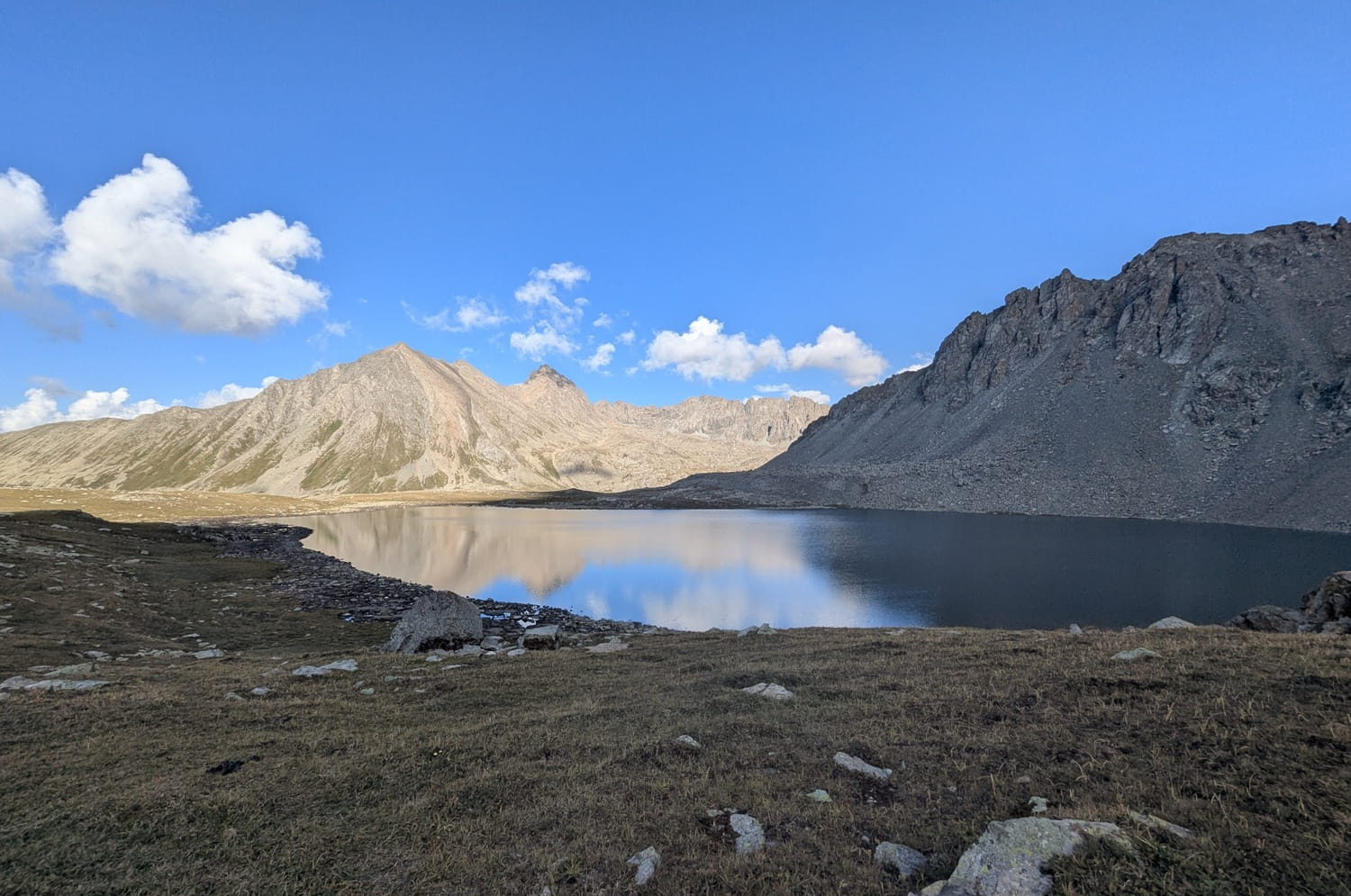
This is a great off-the-beaten-path extension of the Ala-Kul Circuit that only adds 1 extra day to the core route. Panorama Pass sits opposite Ala-Kul Pass and as its name suggests, offers some of the widest angle-views of the Terskey Ala-Too Range, with impressive view of all 5000 metre peaks, Djigit, Pik Karakol & Boris Yeltsin Peak. Be sure to check the route carefully, the bridge up the Karakol Valley is now washed out and not possible to cross safely on foot here.

Trip Recap
Accommodation Style
Choose between wild camping for freedom or yurts for comfort. Gear rental is readily available in Karakol.
Route Extensions
Add variety by crossing Teleti or Panorama Pass, or commit to the full Ak-Suu Traverse for a challenge.
Guiding Needs
Self-navigation is straightforward, but local guides (4000-5000 som/day) offer extra security and insight.
Best Season
July to August is peak season. June and September offer quieter trails but cooler nights.