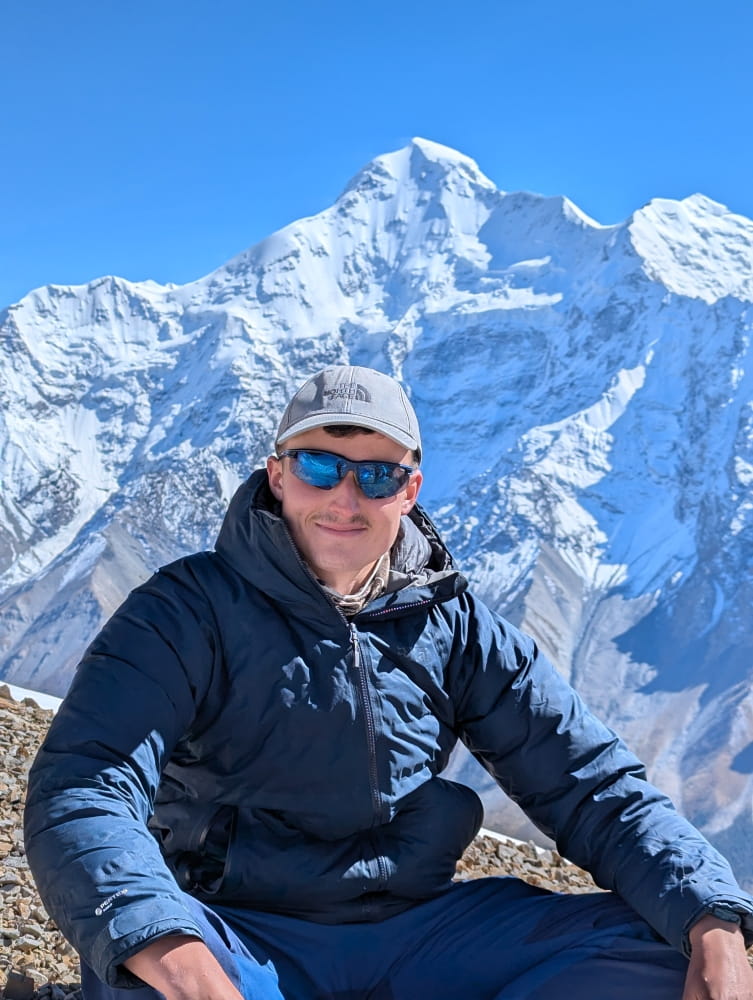
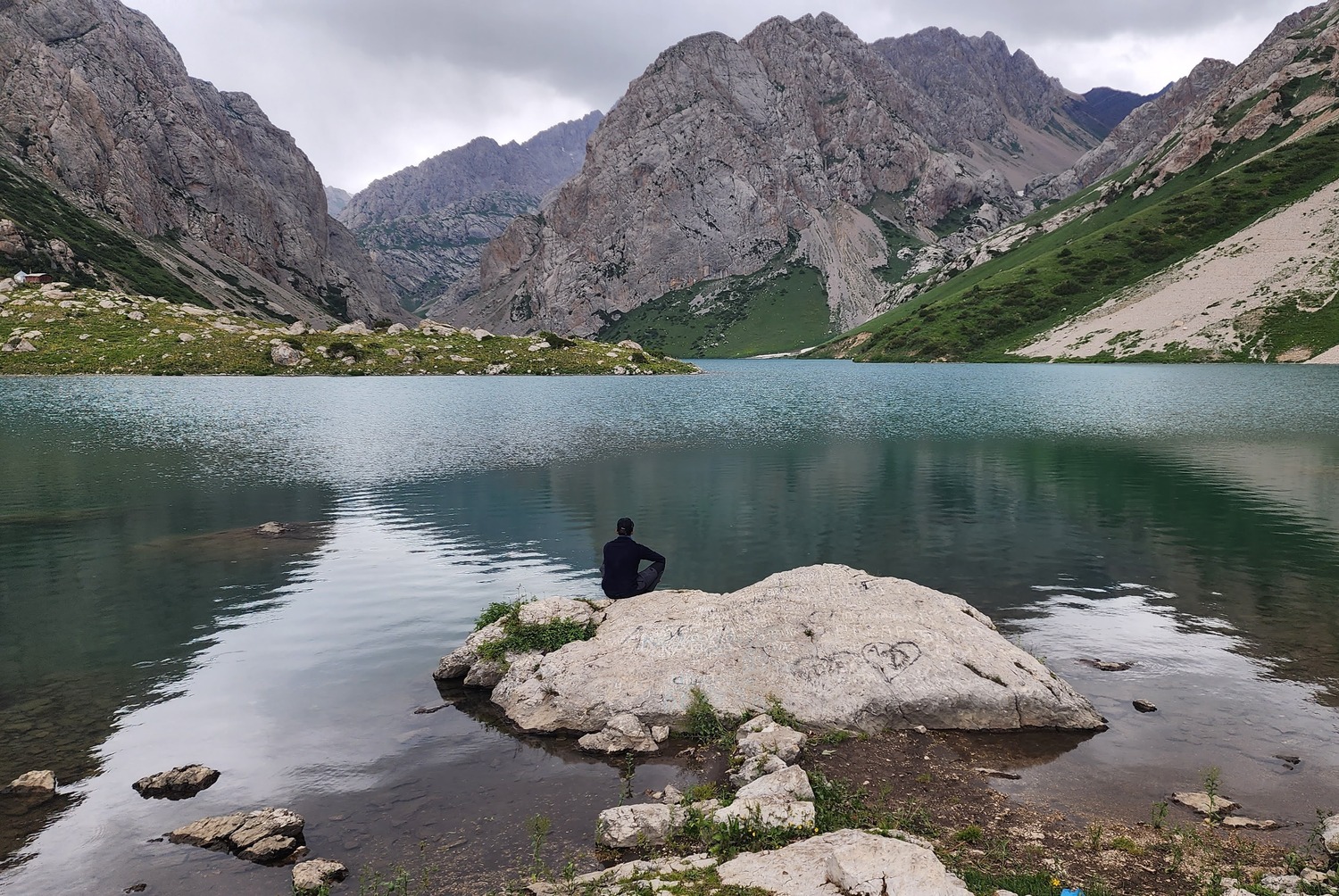
Central Asia is one of the world's most overlooked and misunderstood regions. Many people have never even heard of countries like Kyrgyzstan, Tajikistan, and Uzbekistan. Others ask, "Why would you go there?" And for some, simply hearing a country name ending in "-stan" sparks unfounded fears about safety.
If you've ever had doubts about traveling to Central Asia, consider this your ultimate guide. We're here to bust the biggest misconceptions, share essential travel tips, and give you insights into the region's language, culture, and safety - plus our top destination picks.
Table of Contents
- Introduction
- Visa & Entry Requirements
- Land Borders
- Language & Communication
- Transport & Getting Around
- Internet, SIMS & Connectivity
- Useful Apps & Resources
- Accommodation
- Currency & Banking
- Weather & Climate
- Best Time To Visit
- Hiking in Kyrgyzstan
- Altitude Sickness
- Food & Drink
- History
- Religion & Culture
- Safety & Permits
Kyrgyzstan
Kyrgyzstan, officially known as the Kyrgyz Republic, is a hidden gem in the heart of Central Asia. Bordered by China's Xinjiang region, Tajikistan's vast Pamir Plateau, and the towering peaks of the Tien Shan range - which covers over 90% of the country - this rugged, mountainous nation is an adventurer's paradise.
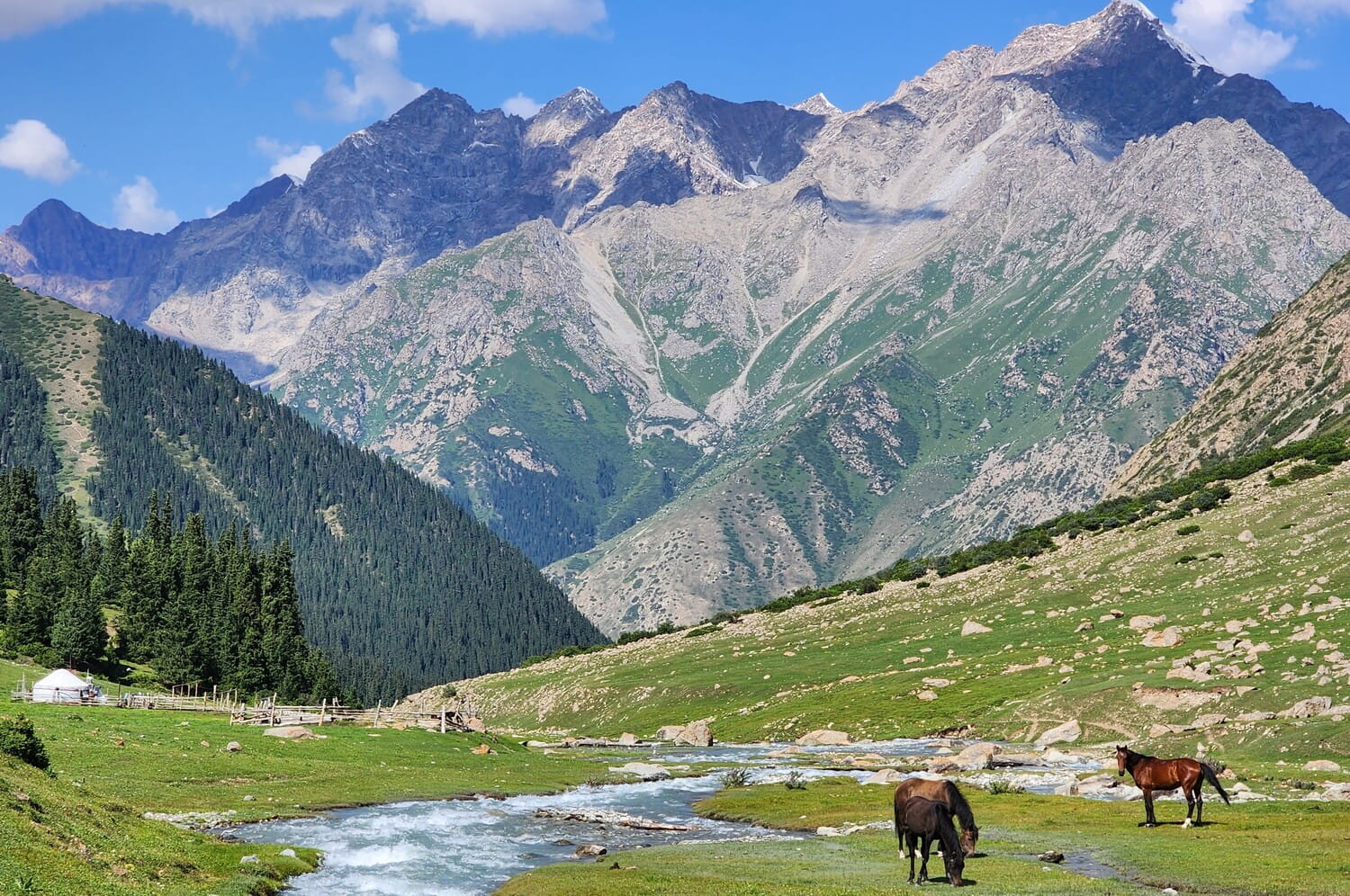
But Kyrgyzstan is more than just breath-taking landscapes. From the lush valleys of the Fergana Range in Jalal-Abad to the dense spruce forests of the northeast and the stark, windswept Pamir-Alai in the south, the country's diversity is astounding. Yet, what truly sets Kyrgyzstan apart is its people. For centuries, nomadic communities have thrived in this wild terrain, living in harmony with the land and preserving traditions that feel like a glimpse into the past.
Visa & Entry Requirements
You're all going to be pleased to hear Kyrgyzstan's entry requirements are very relaxed. In fact, Americans, Brits and European Citizens can travel visa free. (But you can only stay for 30 days across a 60 day period so be careful when making back and forth visa runs in Kyrgyzstan)
And better still, if you are a citizen of Russia, Belarus or North Korea then you can stay for an unlimited period of time without a visa, lucky you!
Land Border Crossings
Central Asian land borders are a classic route for travellers, especially overlanders and bikepackers making their way across continents. The region has a bit of a cult reputation for long, winding road trips, so land borders end up being a big part of travelling in Kyrgyzstan.
Below is a breakdown of the main border crossings with each of Kyrgyzstan's neighbours as of December 2025.
Kazakhstan
Kyrgyzstan and Kazakhstan currently have two active land borders.
Korday Border (Bishkek to Almaty)
This is the most popular crossing between the two countries. It is only a 40 minute drive from central Bishkek.
- Buses run in both directions five times a day at 8am, 10am, 12pm, 2pm and 6pm.
- They depart from New Bus Station, Leninskoye in Bishkek and arrive at Sayran Bus Station in Almaty.
- The price is 600 som (around 8 USD).
The border is open 24 hours and is usually well organised. It can get busy in the mid afternoon, so I recommend taking either the first or last bus of the day for an easier crossing.
Karkyra Border (Near Karakol)
This border reopened in September 2025 after a long period of limited access. It is now open 24 hours.
- A direct Karakol to Almaty bus runs once per day at 10am, departing from Karakol Avtovokzal (North Bus Station) and arriving at Sayran Bus Station in Almaty.
- The price was 1200 som when I used this route in October 2025.
Uzbekistan
Kyrgyzstan and Uzbekistan share several active border crossings, mainly around the Osh and Fergana Valley region. These are generally smooth and reliable for travellers.
Dostuk Border (Osh to Andijan)
The main and most popular crossing between the two countries. It is efficient, foreigner friendly and usually hassle free. Ideal if you are travelling between Osh and the Fergana Valley or continuing onwards to Tashkent.
Madaniyat Border
A convenient alternative to Dostuk and usually a bit quieter. Good for travellers heading west from Jalal Abad into eastern Uzbekistan.
Khanabad or Chalasart Border
A smaller but fully active border that leads into the town of Khanabad. Useful if you are exploring southern Kyrgyzstan or entering the Andijan region off the main road.
Gulistan or Bazar Korgon Border
A less used crossing that connects Bazar Korgon to the Fergana Valley. Handy for travellers planning a route from Jalal Abad through Kokand and towards Tashkent.
Overall, the Uzbekistan borders are some of the easiest in Central Asia, with quick processing and friendly officials.
Tajikistan
The main land border between Kyrgyzstan and Tajikistan is the Kyzyl Art Border, connecting the Osh region to the Pamir Highway.
This crossing has a history of sudden closures due to political tensions. As of 2024, it reopened for international travellers who have a valid Tajik visa if required and a GBAO Permit for the Pamirs.
As of December 2025, it is still open, though it is important to check conditions regularly because closures can happen without notice.
Language & Communication
Kyrgyzstan's primary spoken language is Russian, which is commonly spoken between locals in more urban areas. However, as the location becomes more remote, Kyrgyz becomes the more dominant language.
With that being said, Russian can take you a long way even in the most rural regions as locals are normally at least conversational in Russian.
Trust us, even a very little bit of Russian can take you a very long way in Kyrgyzstan and we will start you off with some very useful words and phrases to help you along your travels.
Important things to know about the Russian Language:
Russian adhered strictly to informal and formal cases and it's very important you address people in the correct case. For example, for strangers and especially people older than you it is important to address them formally, otherwise it can be considered rude. The last thing you want is to experience the wrath of an angry Babushka! (Old Soviet Lady).
Useful Russian phrases for Kyrgyzstan:
- Hello: Zdravst-vuy-te (Informal: Privyet)
- Yes/No: Da/Nyet
- Thank you: Spa-See-Ba
- Please: Po-Zhal-Uysta
- Goodbye: Da Svee-Dan-Ya
Transport & Getting Around
Kyrgyzstan's two major modes of transport are shared taxis and Marshruktras (Basically sprinter vans converted into minibuses). Marshruktras are the cheapest option and operate across the entirety of Kyrgyzstan, to all major cities, towns and most smaller settlements. However, it can sometimes be difficult to know which bus number to take.
Our Top Tip to successfully navigating the Kyrgyz Bus System
Get familiar with the Cyrillic (Russian) Alphabet
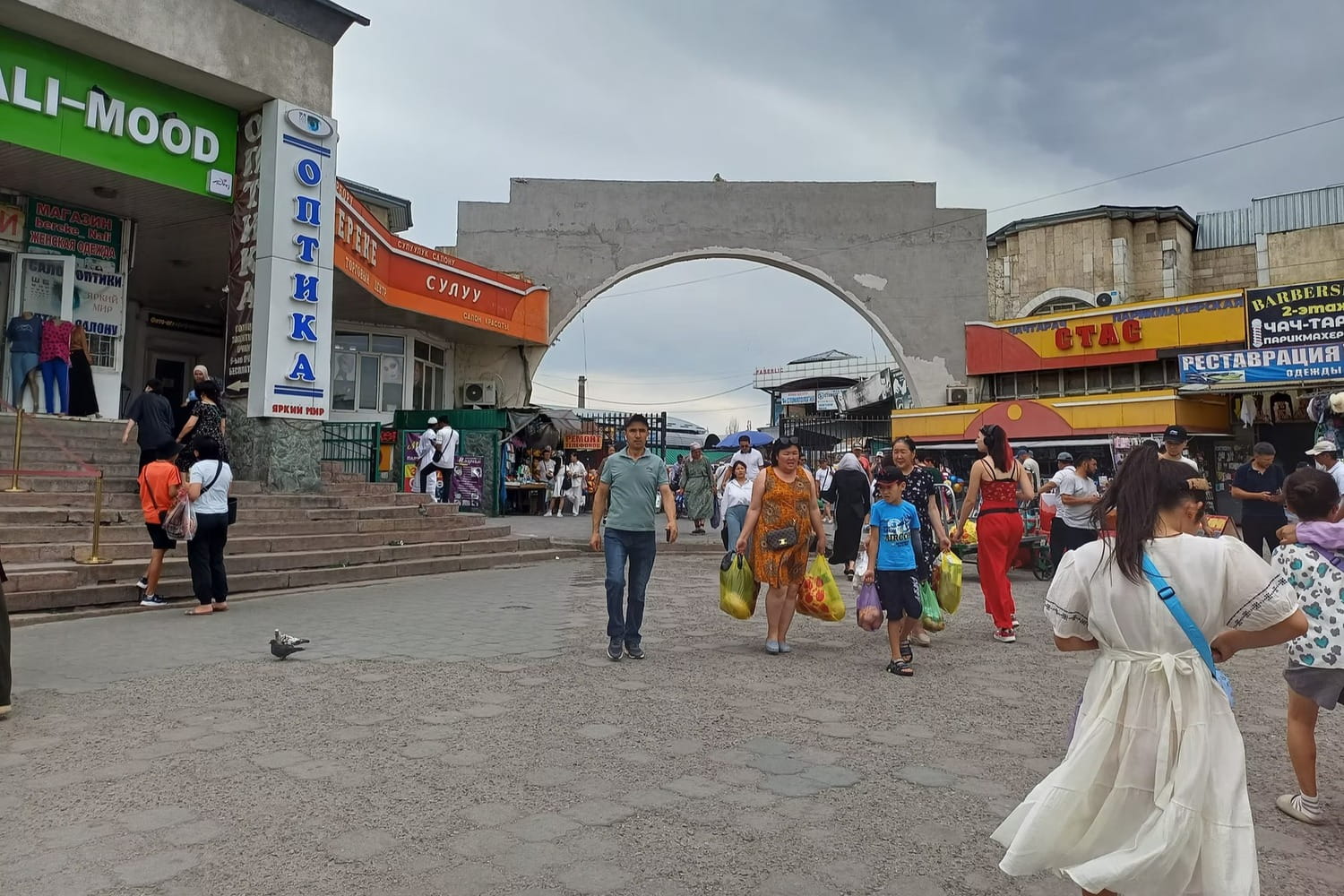
Most marshrutkas have a unique bus route number followed by the start and end location, written in Cyrillic of course. Just by learning to read Cyrillic makes a huge difference, even if you don't speak a word of Russian otherwise, you can at least know which bus you are looking for. And its not that difficult, I personally learnt it by watching a few short 15 minute YouTube clips and then practiced for a couple of days by trying to read words on the front of shops and in cafes and its as easy as that.
Here is a few examples of Kyrgyz cities written in Russian to set you off in the right direction to learning how to read the Cyrillic script:
- Bishkek - Бишкек , here you will see some similarities to the Latin script.
- Jalalabad - Жалал Абад , a bit more difficult but it just takes some practice
- Karakol - Каракол , wait the "p" in Russian is an "r" in English, there are a few cases of this when you compare the two alphabets.
Other useful things to know about Marshruktras in Kyrgyzstan:
- They are very cheap - Normally around $1.50 per hour journey time.
- Make sure to give up your seat to less-abled passengers - This goes without saying and is fairly standard practice in Western Nations, when on short journeys where specific seats haven't been reserved, buses sometimes overfill, be sure to give up your seat to less-abled passengers. They will likely be very direct and demand you to move anyway and the last thing you want is to start a multi-language war of words with the Kyrgyz Babushkas and Dedushkas.
- Drivers have a reputation to charge tourists extra - Not all the time, but a good number of times I have later found out the true price of the journey to be less than what the driver charged. But its rarely more than 40 or 50 Kyrgyz Som (about $0.40) so its hardly worth fussing over. If you're really focused on saving the pennies then most buses have fixed price sheets laminated to the inside of the bus which you can check before you pay the driver.
- Buses rarely run overnight - Most marshrutkas run strictly in the daytime, from 6 or 7am until 8pm.
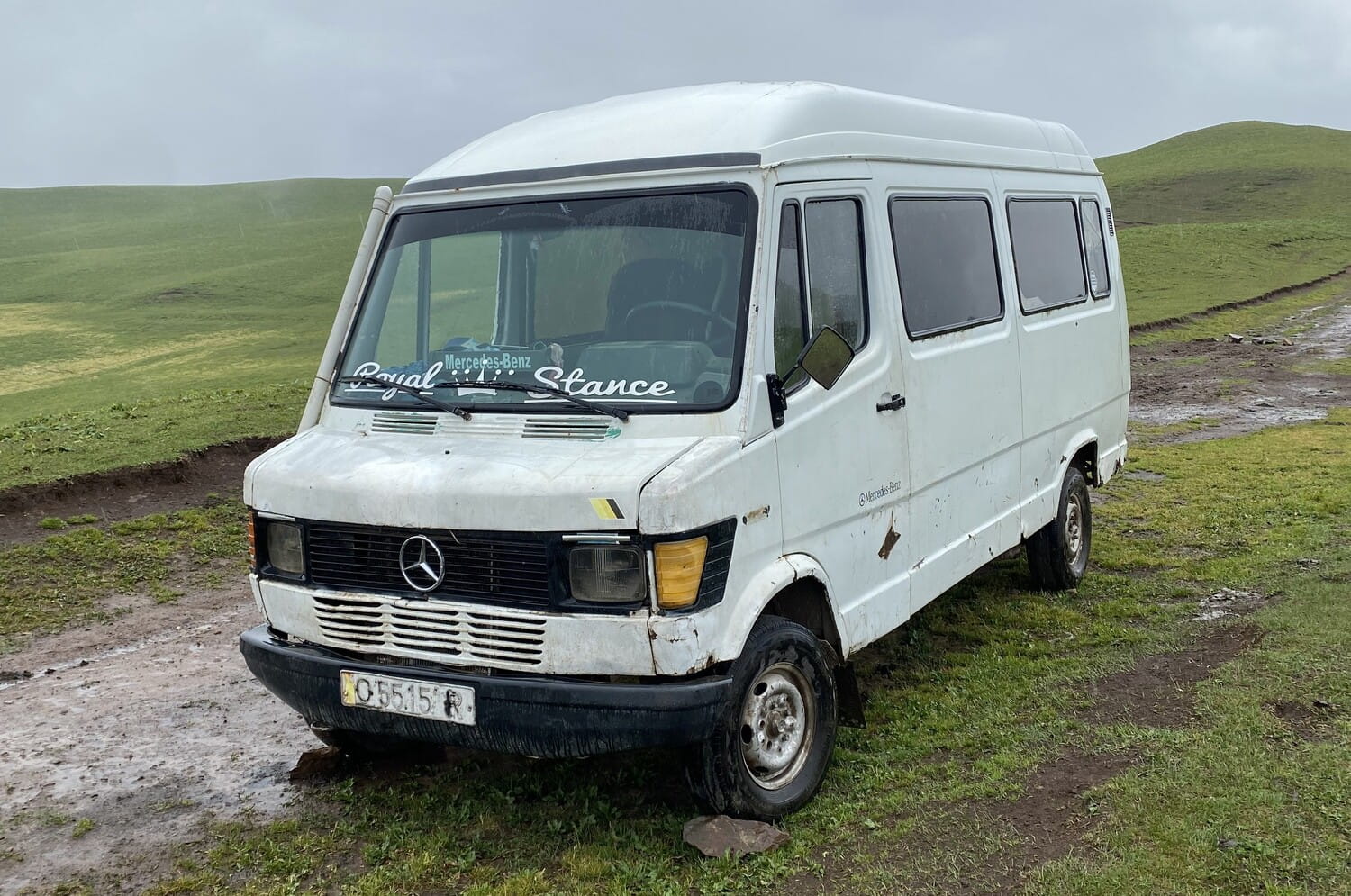
Shared Taxis
Shared taxis are a slightly more expensive transport option in Kyrgyzstan, but tend to be more comfortable and faster over long journeys.
Every large settlement in Kyrgyzstan normally has shared taxis operating to the major towns and cities, you've just got to know where to find them as they are often unmarked. The best thing we can recommend is to ask around the central bazaar area, most shared taxis are waiting here.
Something to note is that they will wait for all seats to fill up. So depending on how many people are heading in the same direction, you may have to wait a while for before the journey starts. If this happens, not to worry, there are plenty of street vendors nearby selling food and drink to pass the time.
Hitch-hiking in Kyrgyzstan: Is it safe?
The short answer is "Yes, its really safe"!
Kyrgyzstan's impressive hospitality also extends to picking up tourists on the side of a road and in our past experience the kindness of the locals didn't stop there; we were offered drinks, confectionary and fruit to sweeten the deal.
In fact, hitch-hiking in Kyrgyzstan is quite standard practice for the locals, its not uncommon to see an elderly lady trying to wave down a vehicle going in her direction. However, one thing to note is that there is sometimes an expectation to pay for rides as every other driver operates as a taxi driver as a side hustle, so its important to either negotiate a price at the start of the ride or specify you have no money to avoid any unwanted conflict.
Remember this key Russian phrase for hitch-hiking:
I have no money: U - Men-Ya - Nyet - Tenge
Alternatively, you could just pay for the ride, it will still be a really valuable method of travel and much more convenient than waiting around for the next driver if your stuck aside a quite road.
Yandex has revolutionised city travel in Kyrgyzstan!
Yandex is effectively the Uber of Russia and Central Asia. Although limited to Kyrgyzstan's largest towns and cities its an amazing travel hack to use when in these regions.
Kyrgyzstan's major cities are mostly very walkable and we definitely recommend taking some time explore Bishkek, Osh and Karakol on foot. However, in particular Bishkek's centre is quite spread out and in the peak of summer its just too hot to be walking multiple kilometres in 40 degree heat to see the attractions or taking a sweaty Marshrutka bus overfilled with people.
Internet, SIM Cards & Connectivity
When it comes to internet in Kyrgyzstan, it's pretty straightforward. In large towns and cities you'll get a stable connection, but once you head into the mountains it becomes very unlikely you'll have any service at all.
As for SIM cards, the main providers are Beeline, O!, and Mega. I've personally always used Beeline as it has been the most stable and consistent in cities and semi-urban areas. If you're travelling as a pair, it can be smart for each person to pick a different provider, just to cover more ground.
Where to get local SIMs?
If you're flying into Bishkek, Manas Airport has all the major providers selling SIM cards right at arrivals, just like most airports. Otherwise, you'll find plenty of small vendors and phone shops across Bishkek offering affordable monthly plans.
Useful Apps & Resources
Navigating the "Stans" is much easier when you have the right tools in your pocket. Here are our non-negotiable apps for a smooth Kyrgyzstan trip:
Yandex
As mentioned above, Yandex is a game changer for getting around cities across Central Asia. It's reliable, affordable, and far more convenient than relying on street taxis or confusing public transport.
Maps.me
Maps.me is excellent for downloading offline maps. In many popular hiking regions, you'll even find marked trails via OpenStreetMap, which is incredibly useful as an extra layer of navigation on the trail.
Caravanistan
Caravanistan is by far the largest online resource for Central Asian travel. It's a huge forum based hub for up to date travel advice and connecting with other travellers planning similar adventures.
Locus Maps
If you're looking for something more advanced, Locus Maps is hard to beat. It's ideal for planning off-the-beaten-path routes using satellite imagery combined with a bit of explorer creativity.
Accommodation
Accommodation in Kyrgyzstan is rather impressive to say the least. In Bishkek, accommodation options are broad and range from budget-friendly backpackers for $5 a night to luxury private rooms for $50-$100.
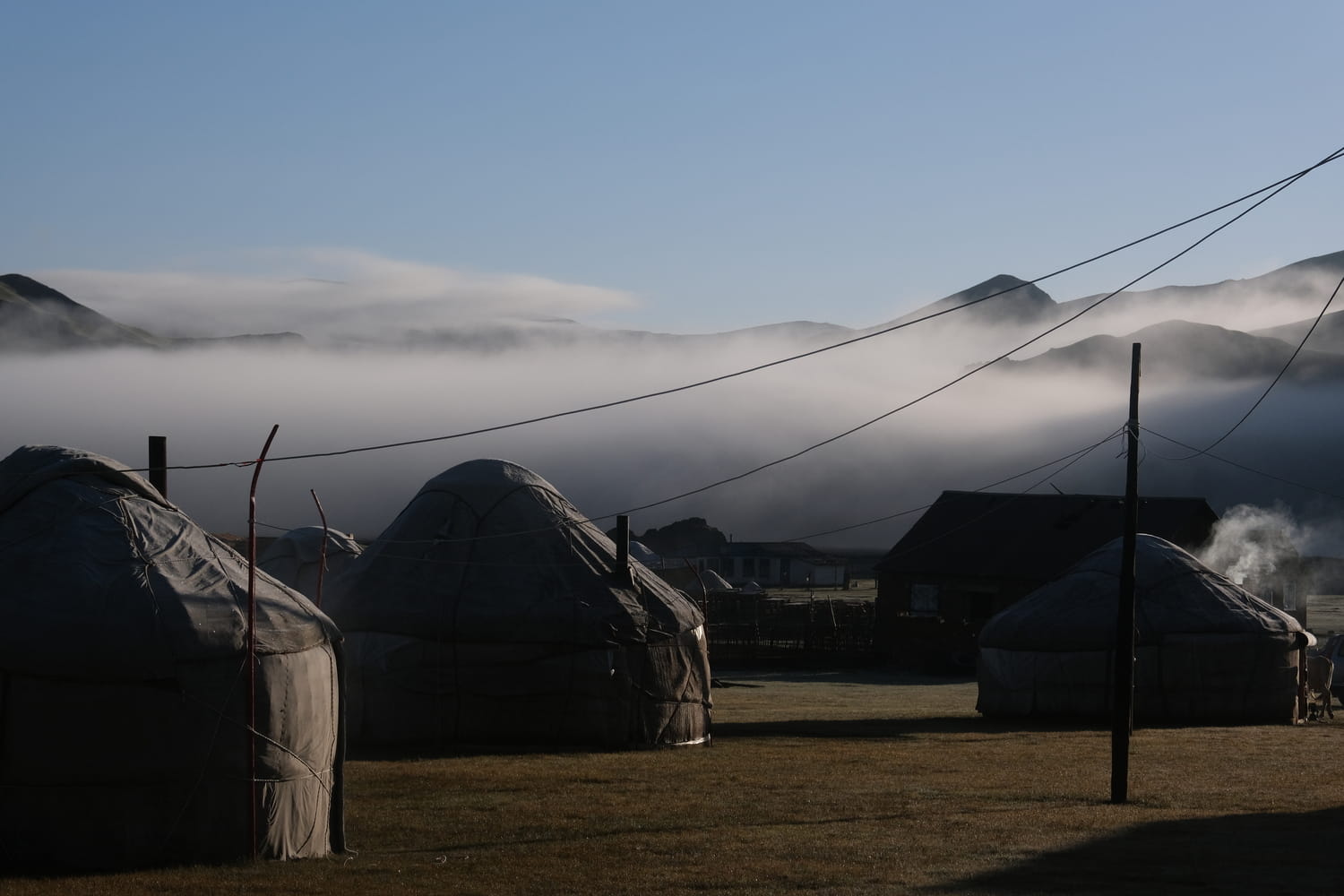
As you move further into the countryside, naturally, accommodation options become more basic. However, don't let this put you off as there are an abundance of local run homestays, guesthouses and yurt-stays with all the basic facilities you need, coupled with incredible Kyrgyz hospitality.
Here are some hotels and guesthouses we recommend staying at:
- Bishkek: Sakura Guesthouse, Sakura is a charming, Japanese inspired Guesthouse located on the East side of Bishkek. They have an amazing outdoor courtyard which is green and well-shaded - Perfect for relaxing and drinking a beer or two after a long day exploring Bishkek's bustling streets.
- Karakol: Snow Leopard Hostel, A cosy family-run guesthouse ran by Jalil & Aizada. They offer a variety of dorms, twin and double rooms, as well as tasty breakfasts and can organise horse-riding trips, guided hikes and onward travel logistics.
- Osh: Park Hostel, The most social hostel in Kyrgyzstan (probably). Park Hostel has a great social area with table tennis, pool tables and a great courtyard for socialising. Bonus: If you like socialising with bikepackers then this is your perfect hostel (They are always happy to share some of their favourite "dusty, roadside" camping spots in Central Asia).
Camping in Kyrgyzstan, What are the rules?
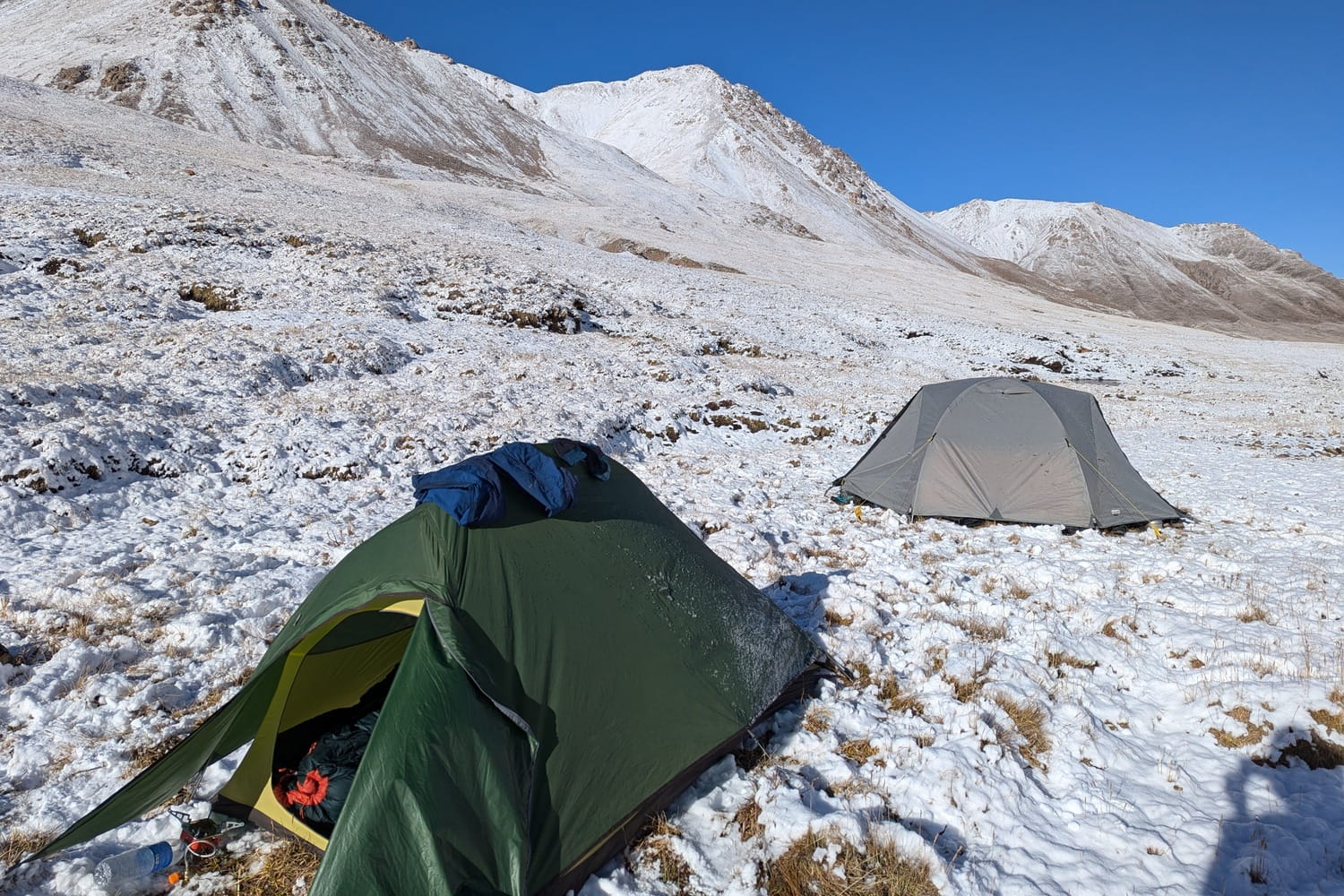
When it comes to wild camping, you can do as you wish. Kyrgyzstan is a country that has stayed well aligned and true to its nomadic values. While this is great as it means you can pitch your tent anywhere, its important to camp responsibly. Take out any non-biodegradable products and be respectful to local populations, as they also populate the mountainous regions.
You can see more about how Great Goat Expeditions ensure responsible, culturally and environmentally friendly practices in the mountains here.
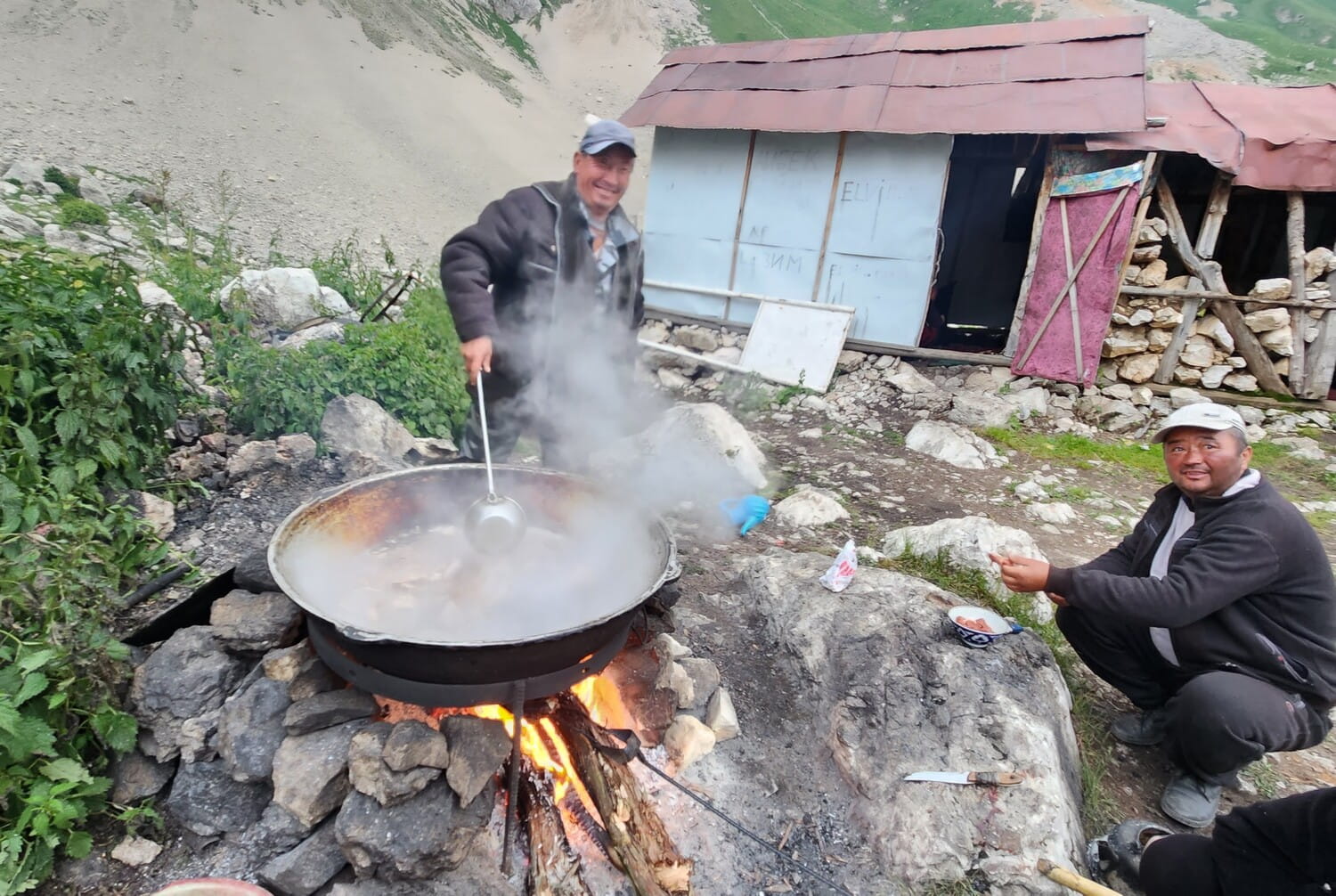
The nomads populating Kyrgyzstan's rural regions are normally very open and friendly towards nearby campers. In fact, most invite you in for Chai and a meat and potato heavy evening meal, insisting you stay with them in their yurt camps. Many are adamant there are human-eating wolves waiting to pounce on vulnerable tourists in a tent, which is no more than nomadic folklore, so don't lose sleep over this.
Currency & Banking
The national currency of Kyrgyzstan is the Som, with $1 USD roughly equivalent to 80 Kyrgyz Som.
Cash is king in Kyrgyzstan. In fact over my many months spent touring the country I can probably only count a handful of times when I have used my debit card, and all of those came in Bishkek. So its important you withdraw sufficient amounts of cash when you get the chance in larger towns and cities.
Withdrawing money
Kyrgyzstan does have a surprisingly large number of tourist friendly ATM's that work for most Visa's and Mastercards. However, Mastercard does seem to be a safer bet here in my past experience.
The only issue is some banks charge large ATM fees for withdrawing on an international card. Sometimes the fee is fixed at say 500 som, whether you withdraw 1000 som or 20,000 som. In this case its much better to withdraw as much as your bank allows you to. Other times, the fee is a percentage of the amount you withdraw.
When you combine these local ATM fees alongside personal bank fees for international withdrawals, things get quite expensive.
Here are some banks which charge lower or no withdrawal fees in Kyrgyzstan to help you save a few dollars here and there:
- Halyk Bank - Large across Central Asia and many ATM's don't have withdrawal fees.
- Demir Bank - In my experience they tend to charge very low flat rates of 200 som per withdrawal, which is good when you withdraw larger sums in one transaction.
- Optima Bank - Officially a Kazakh Bank, their withdrawal fees are normally quite low.
Travel Budget
Now for the million dollar question every budget-driven backpacker wants to know the answer to - How expensive is it to travel in Kyrgyzstan?
Like anywhere in the world, Kyrgyzstan can be as cheap or as expensive as you wish for depending on your tolerance to discomfort. While I won't recommend it, you could eat instant noodles three times a day, wild camp and hitch-hike for less than $5 USD per day.
A breakdown of daily expenses in Kyrgyzstan
| Level | Accommodation | Food |
|---|---|---|
| Budget | $6-8 | $2-5 |
| Mid-range | $15-20 | $6-10 |
| High-end | $40+ | $15+ |
Coffee: Typically $2-3 dollars (More expensive in city centre cafes)
Transport: Yandex Taxis typically range from 100-250 som for domestic city travel.
Beer: $1-2 (Shop bought), $2-3 in Bars
Weather & Climate
It's difficult to summarise the weather in Kyrgyzstan briefly as there are so many micro-climates across the country.
Kyrgyzstan's climate is extremely continental; winters are very cold and summers are very hot, this is especially true in the cities. Bishkek and Osh can reach north of 40 degrees celsius in July and August.
In the mountains, particularly in Northern Kyrgyzstan, weather is relatively predictable with clear morning skies, clouds and isolated storms developing later in the afternoon which normally clear by evening time.
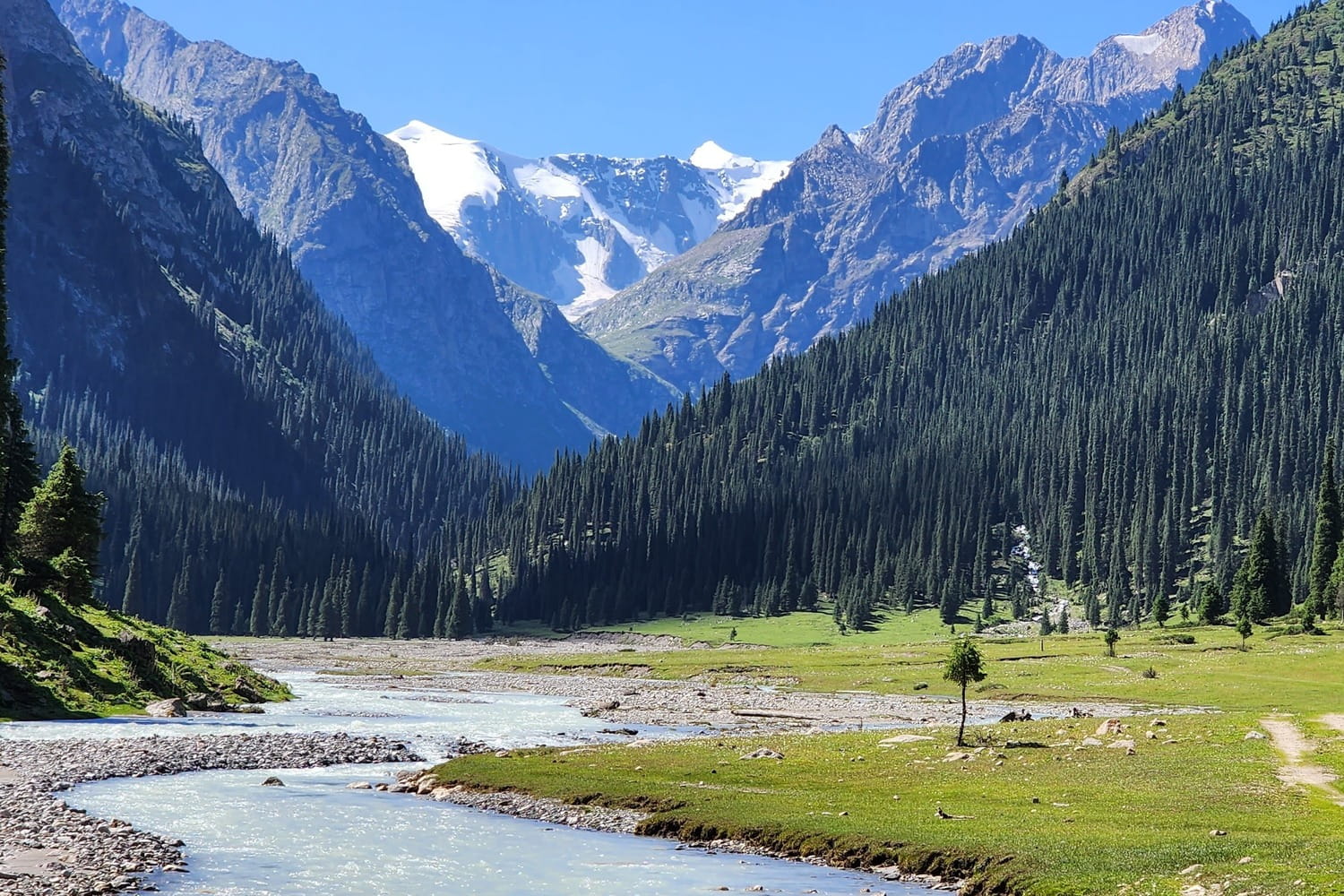
Mountainous regions in the South, particularly the Fergana and Pamir-Alai ranges see the most rainfall in Kyrgyzstan and weather can be less predictable. But don't let this put you off, this makes the landscapes incredibly green and full of impressive wildflowers.
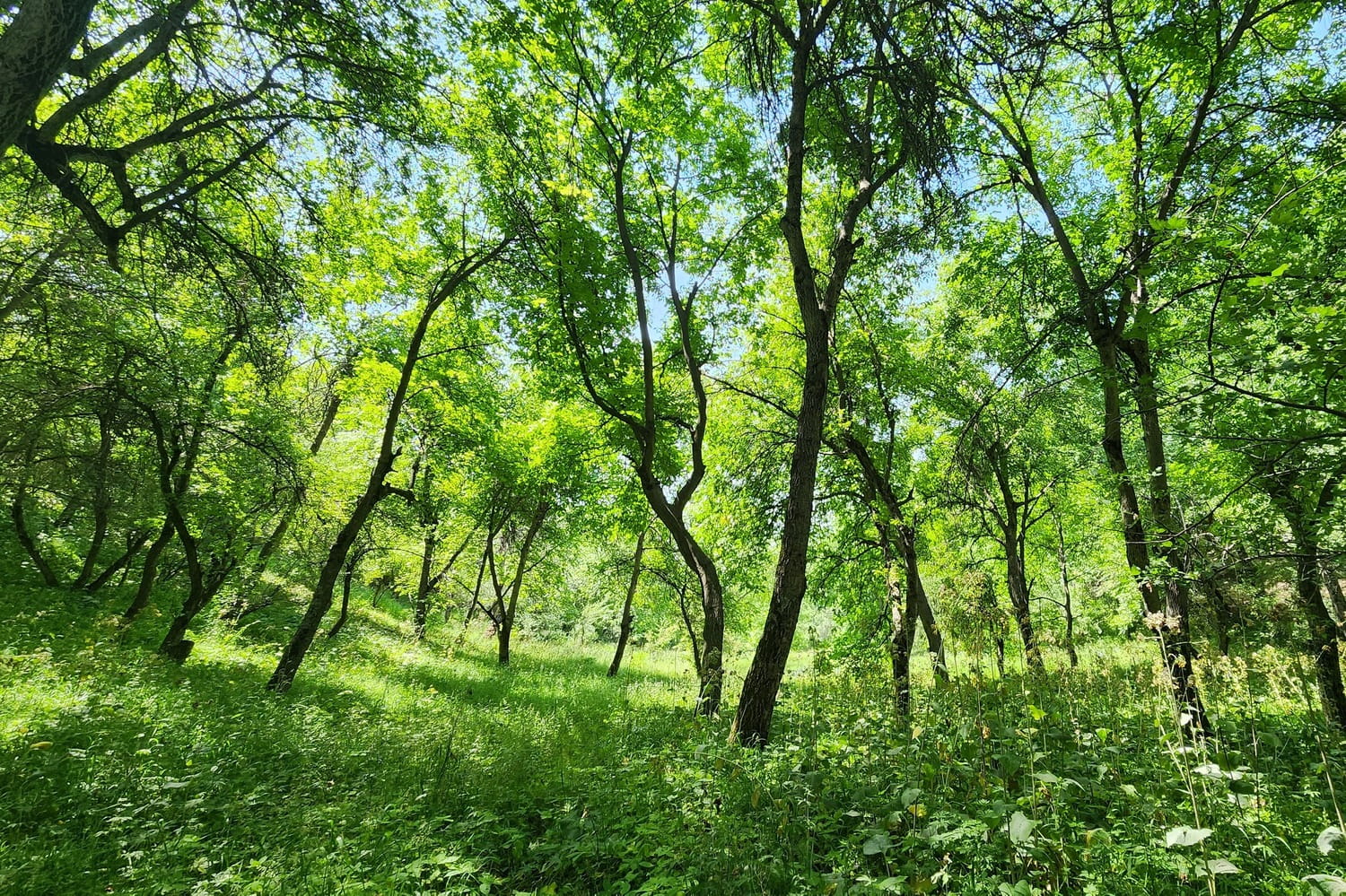
Tip: If you are visiting Kyrgyzstan's Southern Regions, consider visiting in May! It may seem like off-season for mainstream tourism, but the mountains are at their most green and verdant this time due to the high rainfall volume in April.
Best Time To Visit
If you're wondering "When should I visit Kyrgyzstan?" then you're in the right place. Too many online resources say something like, "If you want to trek in Kyrgyzstan, July-August is the best time, and outside this window it gets tricky."
Well, we're here to tell you that's not the case at all.
Kyrgyzstan is a country of huge geographical variety, and if you visit anytime from mid-April to early October, you can access the backcountry without much trouble - as long as you choose the right region.
April-June
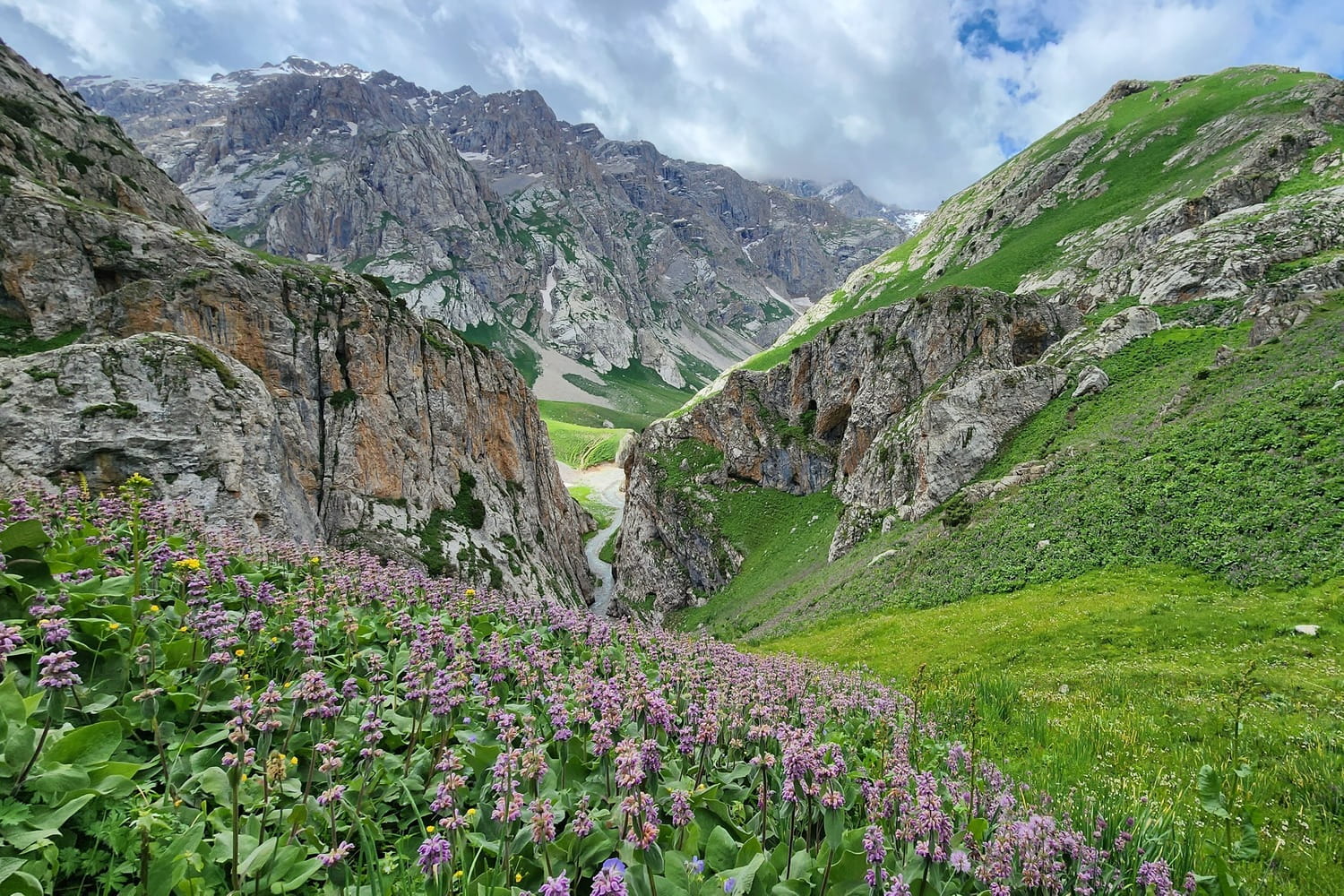
A fantastic time to explore the more temperate mountain ranges. After Kyrgyzstan's mini-monsoon in the south, the Fergana and Alai Ranges burst into life with wildflowers. This is the greenest you'll see the country all year.
These regions sit at lower elevations, with passes that clear earlier in the season, making them more accessible than the high northern ranges.
July-August
Prime time for the north. This is when the Terskey Ala-Too is at its best - spruce-forested valleys, generally snow-free passes, and warm, stable weather.
Just keep in mind that this is peak season, so while the mountains are stunning, you'll also find plenty of other trekkers (thankfully concentrated in only a few popular valleys).
September - Early October
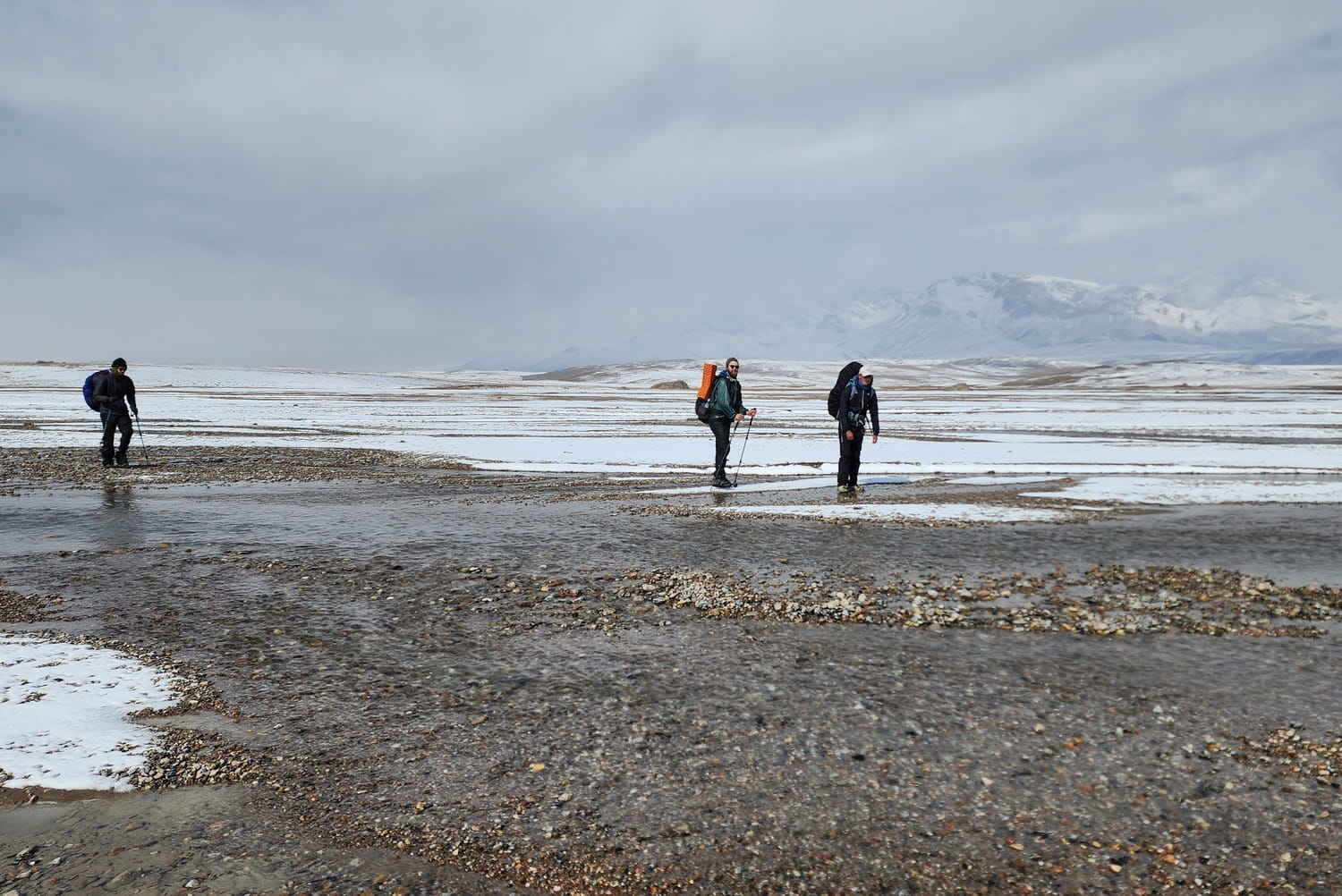
Still a wonderful window for the north and far east, but expect much colder conditions. Take it from us: Ian and I just wrapped up a 10-day trek through Naryn into early October, and we were dealing with -15°C nights, sometimes worse.
The skies are often clear this time of year, but one big storm can shut things down fast. Carry the right gear, plan ahead, and check the forecast regularly.
Hiking in Kyrgyzstan
Well, I could quite literally write a novel on this topic. There is simply an endless list of hiking opportunities in Kyrgyzstan! Despite being a relatively small geographical area, around 93% of the country is covered by rugged mountains. Most of these valleys are just populated enough by nomads to maintain high-quality trails, but not so much that they feel overcrowded - at least for now.
My top tips for hiking in Kyrgyzstan:
- Get familiar with topographic maps: Just because a hike hasn't made it onto a popular travel blog doesn't mean it isn't world-class. In fact, most of Kyrgyzstan's outback remains untouched by mainstream tourism, and few visitors make it further than the handful of "popular" tourist treks. Understanding how to read topo maps can open your world up to the true, raw wilderness of Kyrgyzstan.
- Buy (or rent) camping gear: Trust me on this one, it is a total game changer. Sure, staying in nomadic yurts is a fantastic cultural experience, but carrying your own camping gear provides an unforgettable freedom that opens up regions far beyond the mainstream. Just make sure your gear is high-quality; the weather in the Tien-Shan is no joke and can turn in an instant.
- Speak to the Great Goat Expeditions Team: I'm not trying to brag here, but our team has spent the last 5 years hiking around this backcountry through every spring and summer. It's fair to say we know what we're talking about and can point you toward the real hidden gems.

Looking for more inspiration?
Check out our detailed guide on the most breath-taking routes in the country, from hidden alpine lakes to technical mountain passes.
8 Incredible Hikes in The Tien-Shan →Altitude Sickness
Most of Kyrgyzstan sits above 1500 meters and if you are doing multi-day hikes you will most likely spend time between 2500 and 4000 meters. Altitude sickness can develop from around 2000 meters although it is most common above 3000 meters, especially when you are sleeping at that height.
It is also an illness that does not discriminate. I have seen some of the fittest people I know (including triathletes) get sick, while others with average fitness handle the altitude without any issues. So no matter who you are, it is important to follow a conservative acclimatisation routine.
The good news is that acclimatising in Kyrgyzstan is quite easy. Most towns close to major hiking areas already sit above 1500 meters, which gives you a good start. I recommend spending a couple of nights at this elevation before heading off on a big trek.
After that it comes down to knowing your limits. Try to keep your daily net elevation gain under 600 to 700 meters as going higher can increase your risk. For example, if you spend a few nights in Karakol at 1800 meters, consider sleeping no higher than around 2500 meters on your first night of the trek.
Diamox in Kyrgyzstan:
I have never been able to find Diamox (altitude sickness medication) anywhere in Kyrgyzstan. If you want the reassurance of having it with you, bring it from your home country.
Food in Kyrgyzstan
Kyrgyz Food: "Heavy & Oily, but surprisingly tasty"
I'll be honest, when I first came to Kyrgyzstan it took some getting used to the cuisine here. I would often struggle to digest Kyrgyz food due to the high volume of red meat, oil and carbohydrates. That being said, over the years I've come to really enjoy Kyrgyz food.
Here are some typical Kyrgyz Dishes we recommend when visiting:
- Beshbarmak: Translating to "5 fingers", Beshbarmak is a traditional Kazakh/Kyrgyz dish comprised of boiled meat and noodles. The meat is normally horse, mutton or beef. It's a hard dish to advertise just by words alone, but trust us, if made well its very tasty and a local favourite.
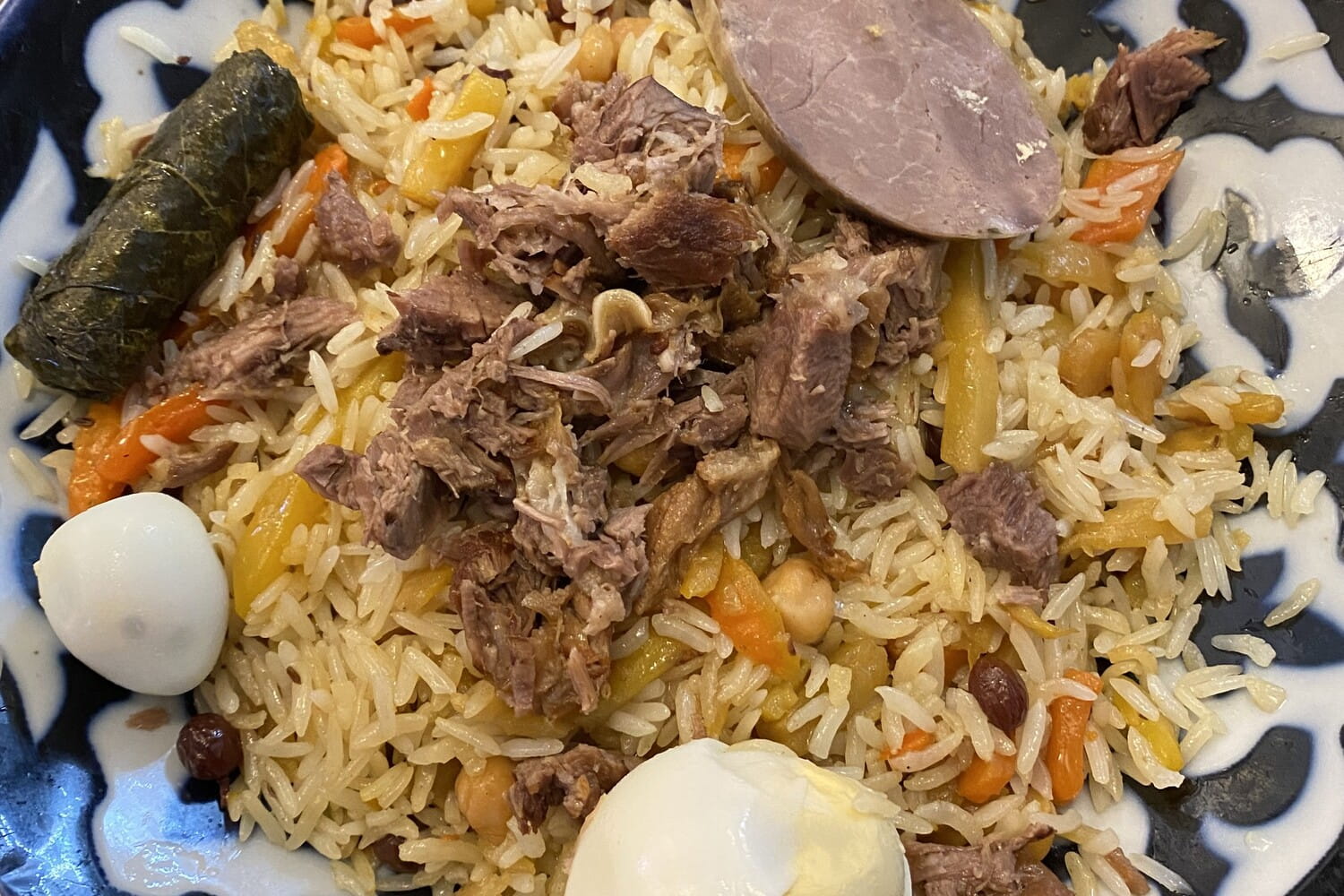
- Plov: Maybe it doesn't sound particularly fancy, but it can be very tasty. Originally an Uzbek dish, Plov is a combination of rice, finely cut vegetables and a meat. And you can find it pretty much anywhere. "Where there are Kyrgyz, there is Plov"
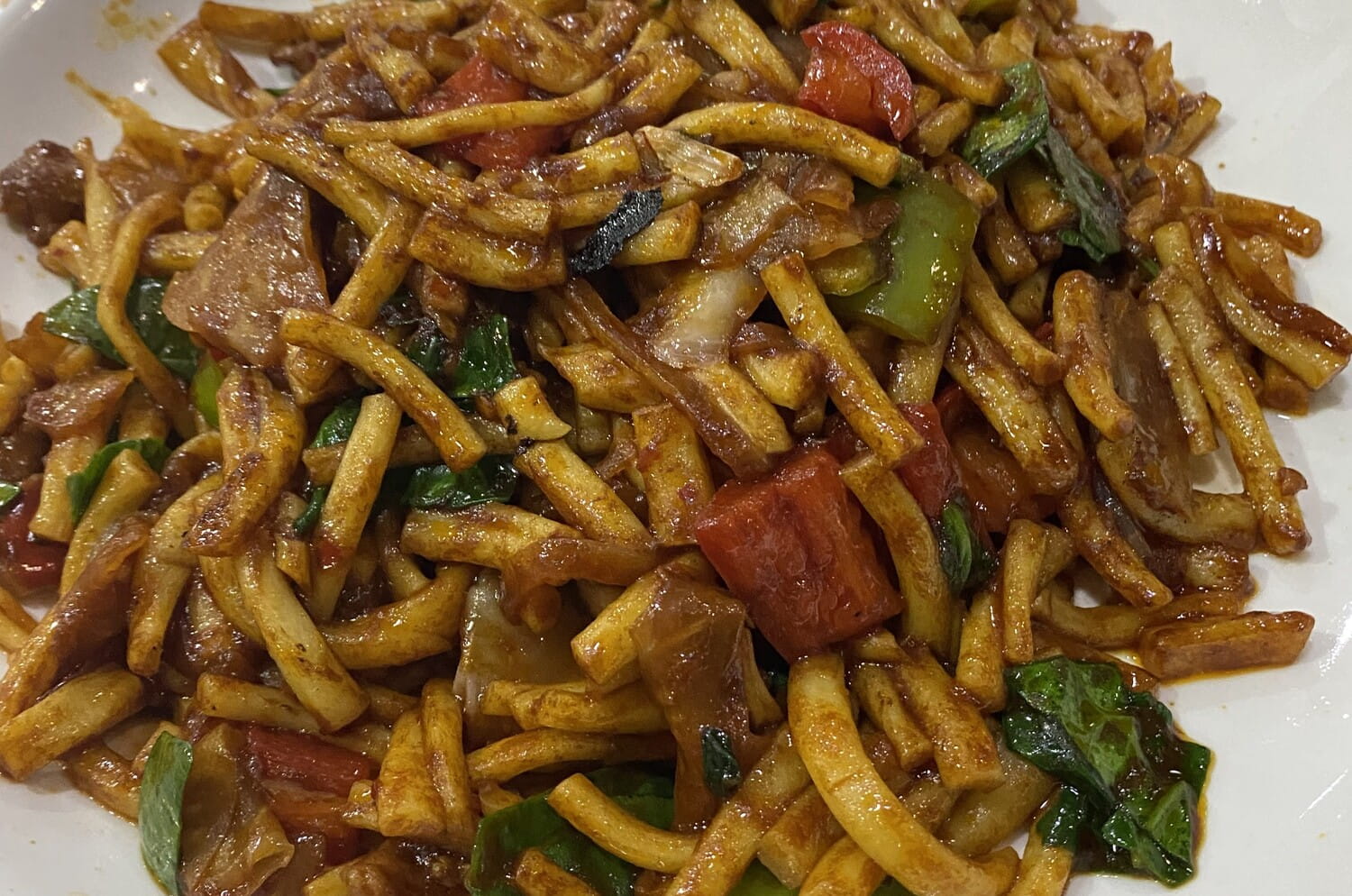
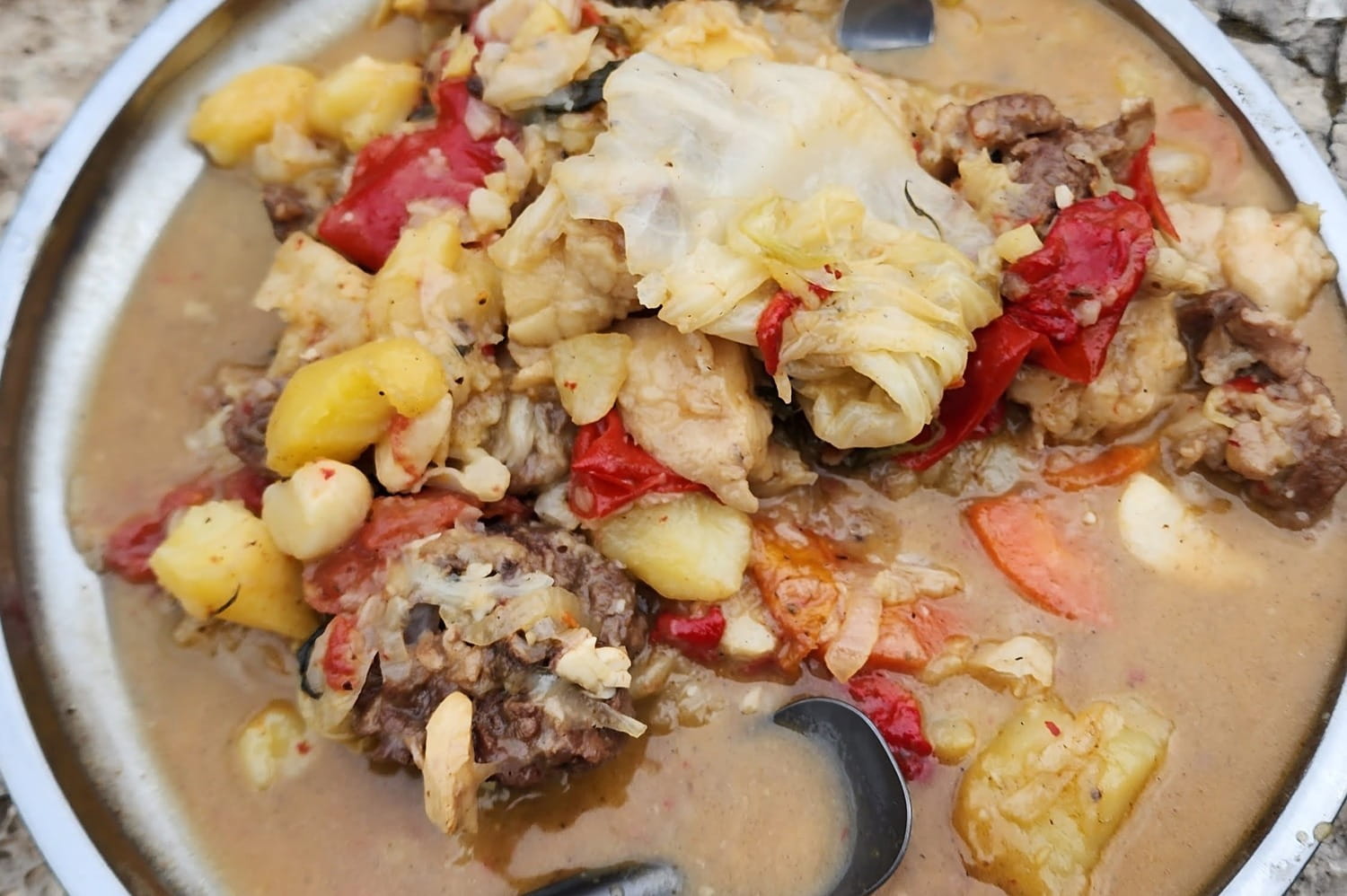
- Lagman: A pulled noodle and meat soup with vegetables, though it can often be in fried form. Its a staple dish in Central Asia.
Our recommended restaurants in Kyrgyzstan
At Great Goat Expeditions, if we're not hiking, we're probably eating. For that reason we've had the chance to explore hundreds of different eateries across Kyrgyzstan, whether that be traditional Central Asian Chaikhanas or Bishkek's surprisingly diverse international restaurant scene.
Here's our top picks across Kyrgyzstan:
- Furisota, Bishkek: The best Japanese restaurant in Kyrgyzstan by a country mile. It helps that the owners are Japanese. Now you're probably thinking, "Where is the fresh fish coming from, Kyrgyzstan is over 2000 km from the nearest ocean". Well, we're not completely sure ourselves, but its incredibly tasty, authentic and hygienic.
- Navat, Bishkek: Its always a safe bet if you want to get a taste of Central Asian Cuisine. They have a huge menu full of local delicacies. From boorsok to beshbarmak to cummus (fermented horse milk), you'll find it all at Navat. (Navat are one of Kyrgyzstan's largest restaurant chains).
- Lighthouse Cafe, Karakol: Across my many visits to Kyrgyzstan I've made it my mission to find the best roasted coffee. And Lighthouse Cafe has to take the podium for this one. They offer great Italian style coffee and delicious healthy western-style breakfasts for a fraction of western prices.
Should you be worried about food poisoning in Kyrgyzstan?
In short, YES!
Kyrgyzstan sadly hasn't quite discovered the importance of food hygiene, in particular how to store meat correctly, take it from me, having spent large periods of my adult life working in a Kitchen back in New Zealand.
Of course its not everywhere, but I frequently hear food poisoning related horror stories from many backpackers across Kyrgyzstan. (It's not isolated to Kyrgyzstan alone, this is happening across most of Central Asia. Tajikistan is the worst for this!)
My Biggest Tips for avoiding food poisoning in Kyrgyzstan:
- Avoid Pizza here, especially those with meat on it! I'm not exactly sure what they're doing wrong in the pizza restaurants but I've met so many people reportedly getting sick after eating there, including myself. This is less true for Bishkek, but for smaller towns like Naryn, Karakol and even Osh are a risky option.
- Try to eat local! Try and stick to the local dishes that the Kyrgyz know how to cook properly. I've never got sick from Shashlyk or Beshbarmak before (despite being meat heavy)! After all, "When in Kyrgyzstan, do as the Kyrgyz do". Just don't get too excessive with the lamb shashlyk, its a recipe for acid reflux.
"I am vegetarian, how will I survive in Kyrgyzstan?"
I'll be honest, adhering to a strict vegetarian diet in Kyrgyzstan is no easy task.
But it's not completely impossible with some creative alternatives.
As a meat-lover I don't have much to add to this topic, but I have met many vegetarians in Kyrgyzstan, each with their own creative ways (and also not so creative ways) of staying healthy and avoiding meat, I'll share a few of these:
- Living on a diet of bread & ONLY BREAD: I've seen it before, it may not be ideal but it is dense in carbs at the end of the day.
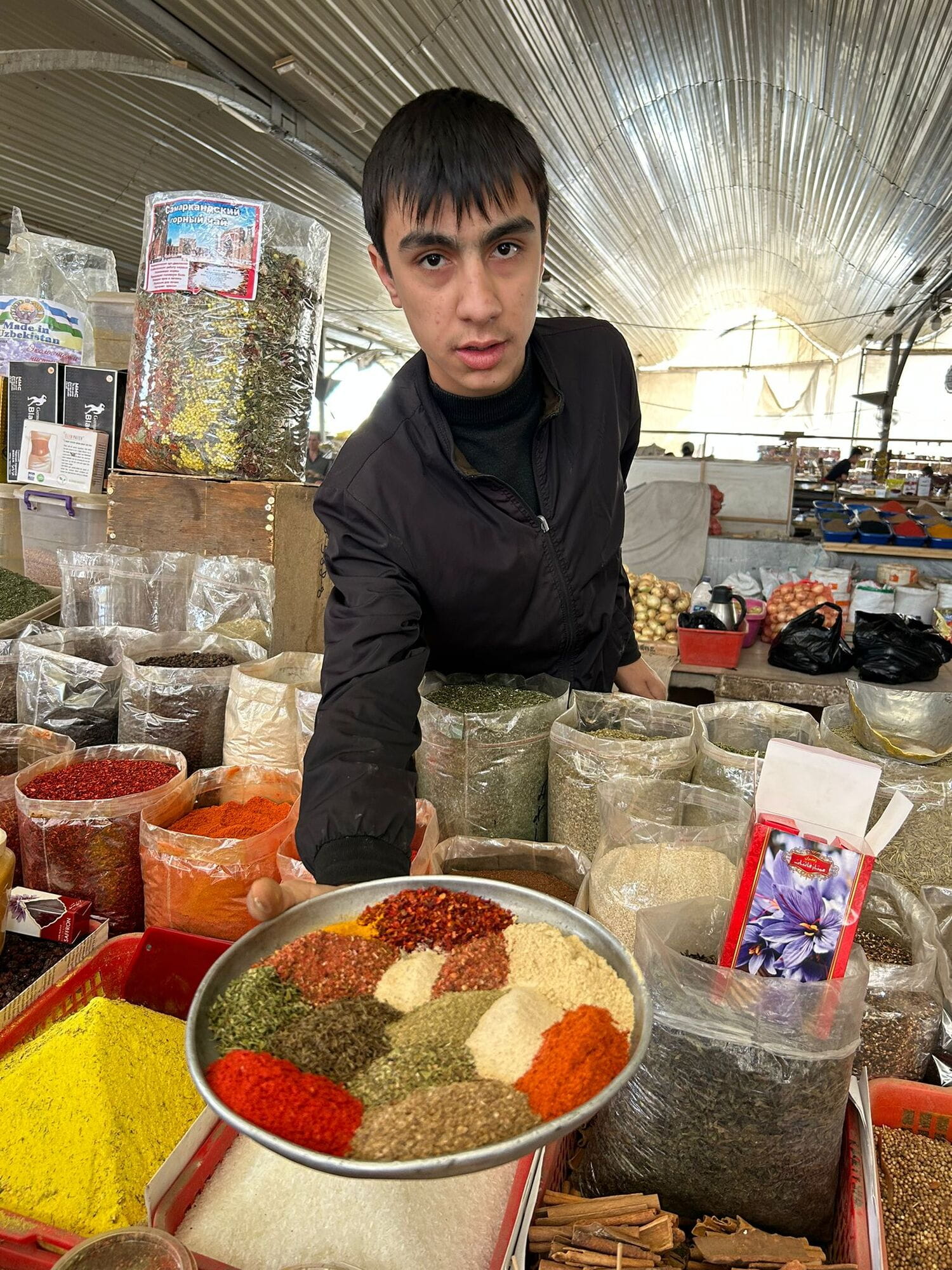
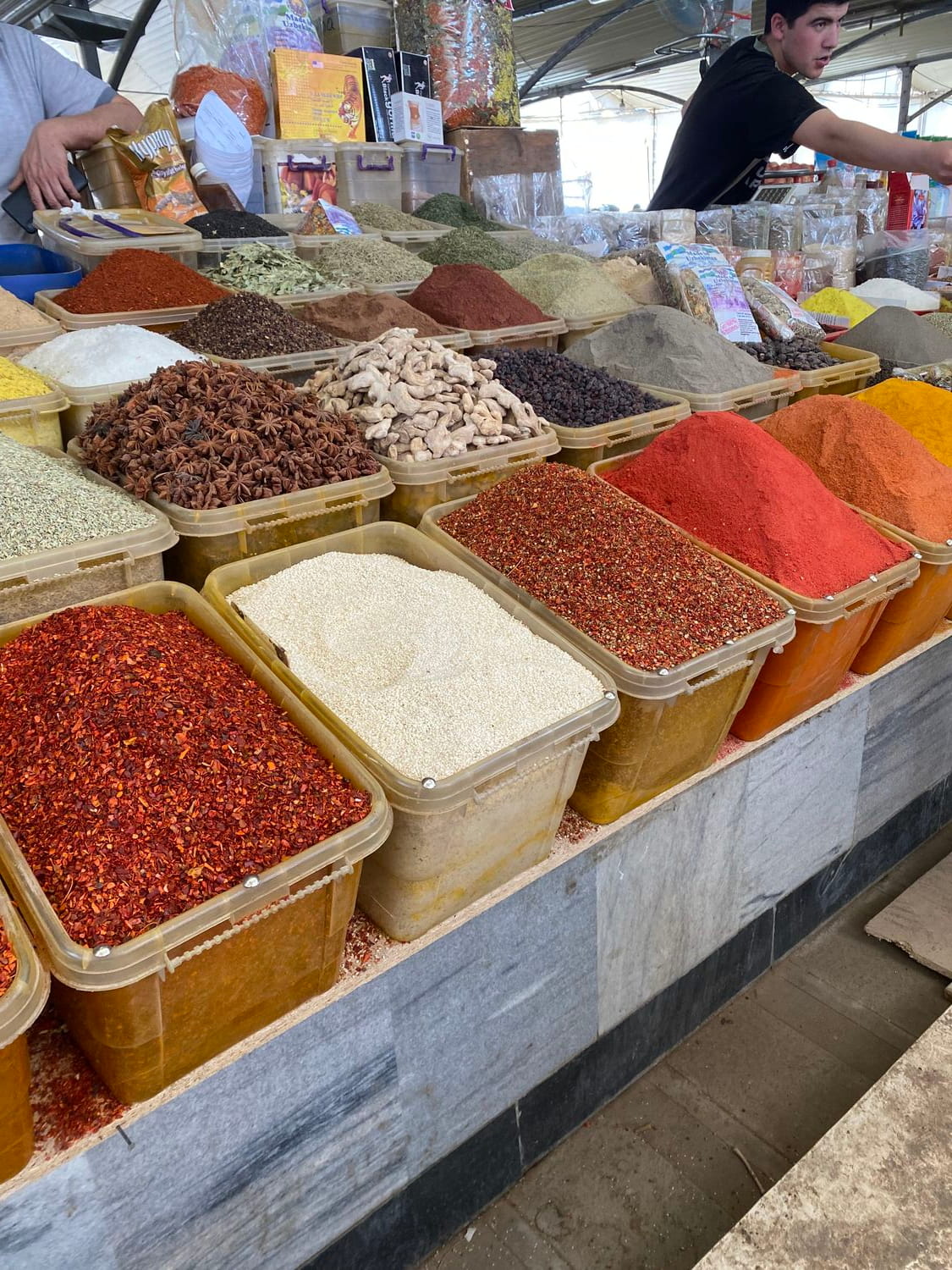
- Shopping at bazaars & cooking at hostels: This will be your best bet as a vegetarian in Kyrgyzstan. The diversity of grains, legumes, herbs, spices and fruits/vegetables on offer at Kyrgyzstan's bazaar are second to none. I've cooked up many lentil daals in Karakol to break up the Central Asian cuisine from time-to-time. And its the cheapest way to eat in Kyrgyzstan.
The options above are solid, but for most vegetarians I met in Kyrgyzstan, the usual strategy was… to start eating meat again. And no, I'm not being controversial - it's just that Kyrgyz cuisine has a way of turning even the strictest vegetarians into flexitarians.
What about Kyrgyzstan's fascinating history?
Early Medieval History
Kyrgyzstan's history is as deep and fascinating as its wilderness! But let's be honest, not many people really know much about the place. So here's the extremely quick version…
Way back in the 2nd millennium BC, the region was home to early nomadic peoples - ancestors of the Kyrgyz who were part of the wider Turkic world. They lived in small tribes and roamed the mountains for thousands of years. That is, right up until the 13th century, when (you guessed it) Genghis Khan's Mongol Empire swept through Central Asia.
(Fun fact: this is one reason why many Kyrgyz today have physical features closer to Mongolian than to western Turkic groups.)
After the Mongol conquest, Kyrgyz lands ended up under the rule of the Chagatai Khanate, and nomadic culture stayed firmly intact. That is, at least until the Russian Empire showed up.
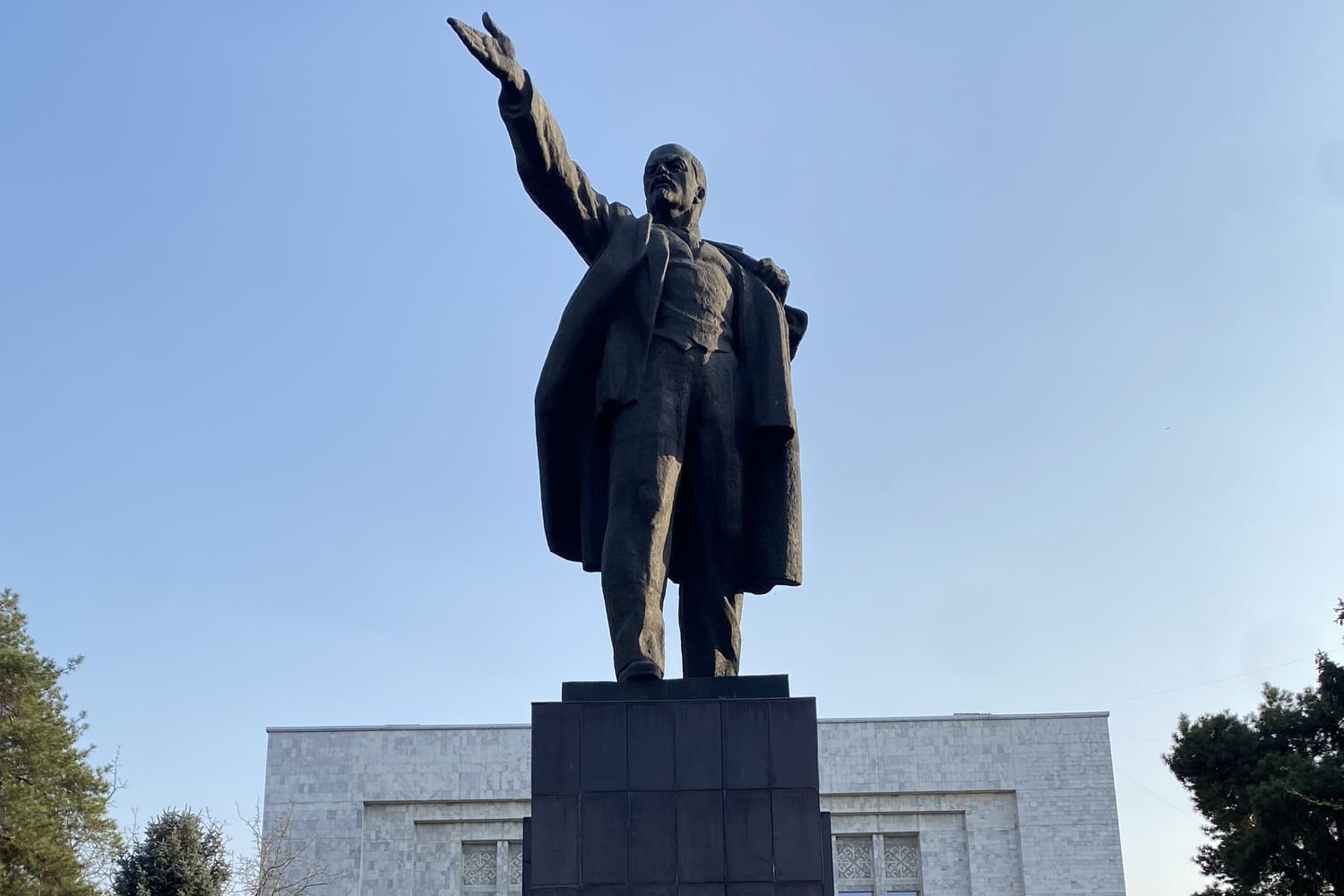
In the 1860s, Kyrgyzstan was officially absorbed into the Russian Empire, and within a decade Russian and Ukrainian settlers were moving in. Traditional nomadic life became increasingly restricted and threatened.
Then came the Soviet era. Kyrgyzstan became the Kyrgyz Soviet Socialist Republic (Kyrgyz SSR) in 1936, and under Stalin's rule religious life - including Islam - was heavily suppressed, with mosques closed or destroyed.
(Side note: Kyrgyz soldiers also fought as part of the Soviet Army during World War II.)
Finally, in 1991, with the collapse of the USSR, Kyrgyzstan gained independence. Since then, Islamic culture has re-emerged, and the country has stayed proud and connected to its deep nomadic heritage.
Religion & Culture in Kyrgyzstan
Okay, so Kyrgyzstan is an Islamic country, sort of!
The official, state-recognised religion of Kyrgyzstan is Islam. And its the most practiced by a long shot. But its a very liberal branch of Islam (which is true for all of Central Asia).
In fact, in Bishkek, Islam plays such a minor impact on the culture there and with the rising liberal younger generations, you could mistake Bishkek for somewhere in Western Europe, but how so:
- Women dress liberally (skirts and short shorts are becoming the norm)
- Alcohol is widely available and the locals embrace this. You can pretty much buy alcohol at most restaurants and supermarkets across Bishkek & Karakol. Nowadays, there is a vibrant bar/tavern scene brewing in Bishkek.
- Women have a much more important role in society compared to other Islamic Nations.
That being said, other regions of Kyrgyzstan, particularly the South, where there is much greater Uzbek influence, tend to be more conservative so its important to respect the unwritten rules there.
But in the grand scheme of things, Kyrgyzstan is super relaxed with religious customs and there's not much more to it than that.
If you're looking for practical tips for travelling to Kyrgyzstan as a woman, we've got a blog post just for this, written by women!
Travelling in Central Asia: Top 10 Tips for Women
Discover MoreBorder Permits In Kyrgyzstan
Now, you may have heard about border-zone permits for Kyrgyzstan. Well… yeah, they're a thing here, and they are important.
If you're planning to visit regions close to the Chinese, Tajik or Kazakh borders, then you'll probably need one. Here's a region-by-region summary of where they're required:
Issyk Kul Region
Enilchek, Echkili-Tash, Sary-Jaz, Ak-Shyraak, Karasai
Naryn Region
Kel-Suu Lake, Chatyr-Kul and Tash-Rabat (although I was never checked there)
Batken Region
Leilek District, Kyzyl-Bel, areas close to the Tajik enclaves (Vorukh / Sokh border strips)
Osh Region
Officially the Lenin Peak region (although I've never been checked and most people go without permits), plus the Irkeshtam border zone
Chui Region
Chon-Kemin National Park border strip, remote Aksai Glacier approaches
They're not difficult to apply for. You simply pre-order them online for the regions you need and pay the fee. Last time I checked, they were around $25 per region.
Just make sure you apply in advance because processing can take up to two weeks, unless you pay for the express option which usually brings it down to 1-2 working days.
If you have any more questions about border permits, feel free to reach out to our team. We can help and point you toward someone reliable to arrange them for you.
Final thoughts
That's pretty much all we've got on Kyrgyzstan for now. Hopefully, after reading this you'll have a solid base to work from when planning your Kyrgyzstan adventure.
If you have any more questions, we're more than happy to help. Just reach out to us via email or WhatsApp and we'll point you in the right direction.