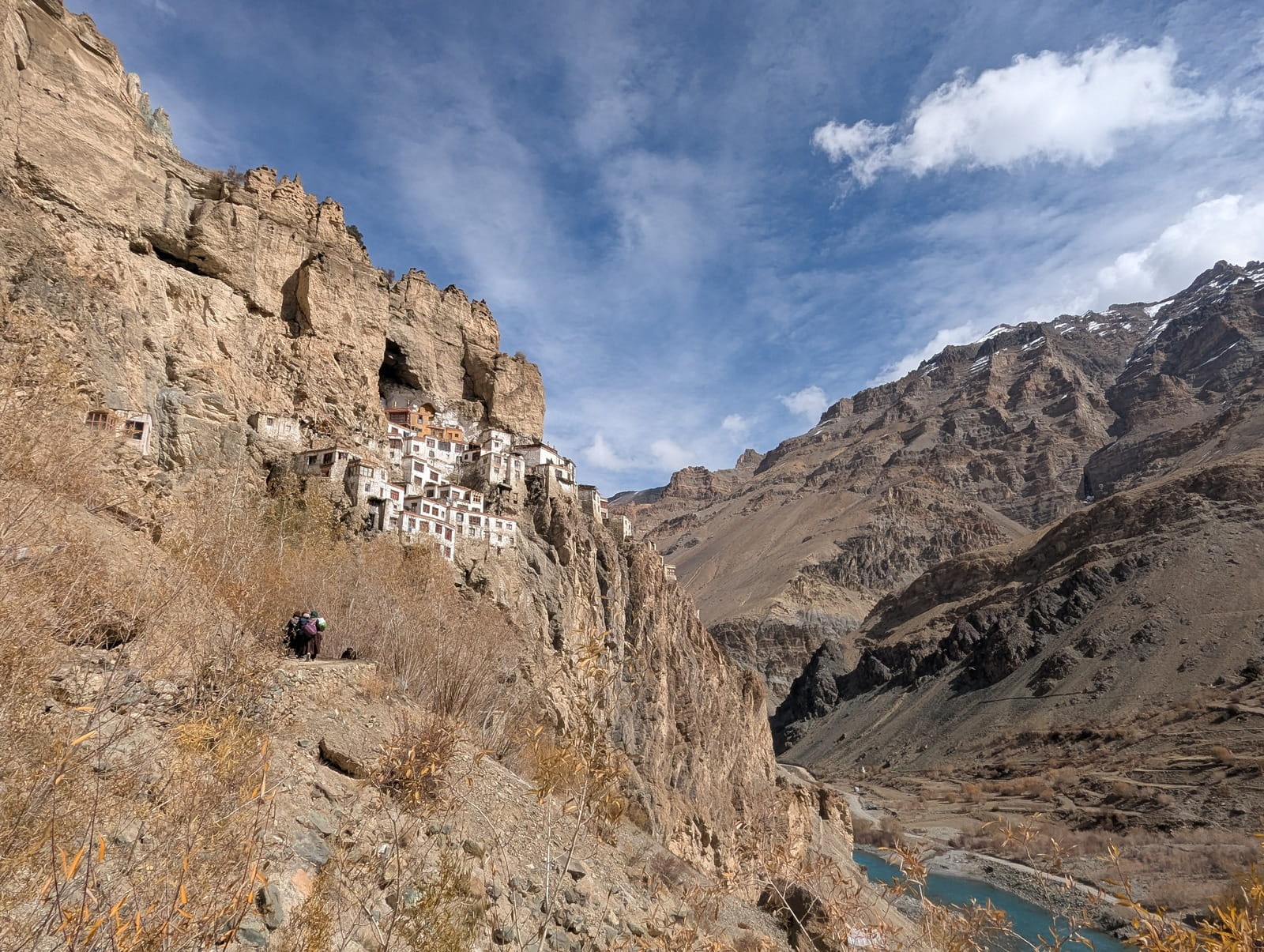
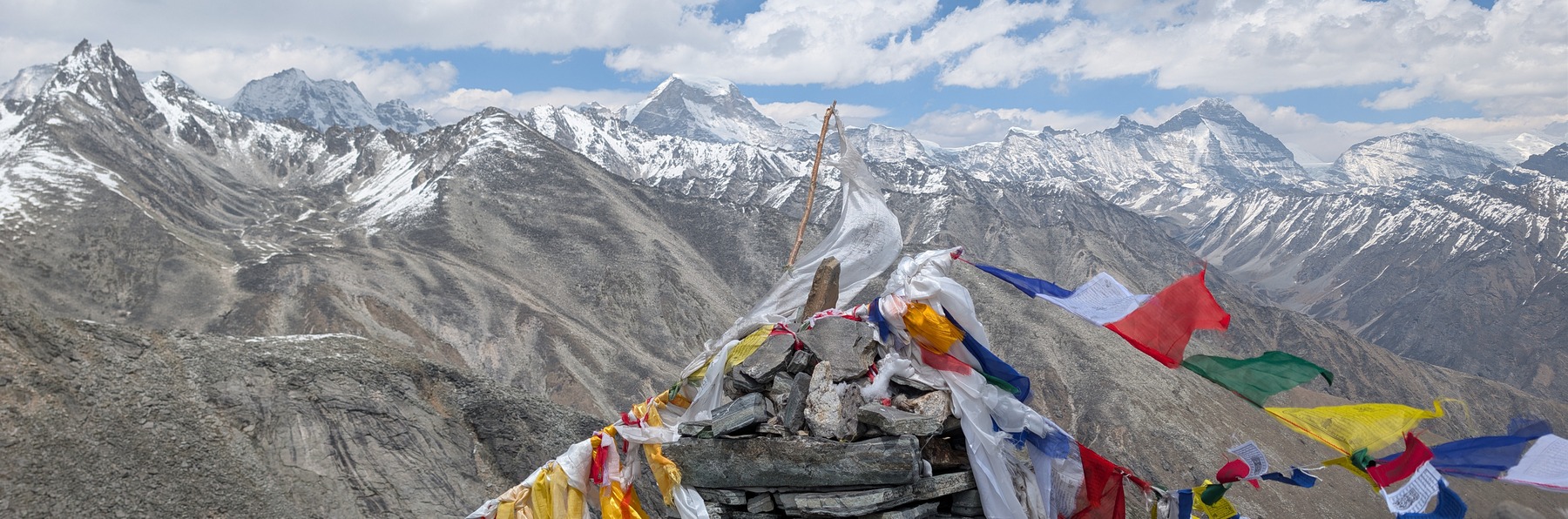
Nepal: The Roof of the World
Stretching across the mighty Himalayas, Nepal is the undisputed roof of the world, home to 8 of the planet’s 14 8,000 meter peaks. Offering a thrilling combination of towering summits, accessible trails, and vibrant mountain culture, it is the ultimate destination for the trek or expedition of a lifetime.
Key Information
-
Population ~30.5 million
-
Religion Hinduism (81%), Buddhism (9%)
-
Capital City Kathmandu
-
Languages Nepali (Official), 100+ Regional Languages
-
Area 147,516 km²
-
Ranges Himalayas
-
Ethnicity Chhetri (16%), Brahman (12%), Magar, Tharu, Tamang, Sherpa, etc.
Overview
Nepal is a small, landlocked country bounded by its much larger neighbors: Tibet to the north and India to the east, west, and south.
The country is famous for the Himalayas, which cover the northern section of Nepal. The mountains span the country horizontally from Kanchenjunga in the far east, bordering Sikkim and Tibet, all the way to Api-Saipal in the far west, where the range continues into Uttarakhand.
Culturally, Nepal hosts an immensely diverse range of religions, ethnicities, and ways of life. Hinduism and Buddhism are the major religions here, with the landscape acting as a transition. Hinduism is prominent in the southern Terai plains and large cities, gradually shifting to Buddhism in the high mountains. This Buddhist influence spread south from Tibet as the Sherpa people migrated into Nepal between the 13th and 15th centuries.
Nowadays, trekking in Nepal is very developed. Many regions are completely accessible to those without camping equipment due to the existence of teahouses. These Himalayan homestays offer basic rooms and hot meals to keep you going.
Yet, there still exist a few regions where Nepal remains off-beat, less developed, and culturally authentic. This is exactly the space where we operate.
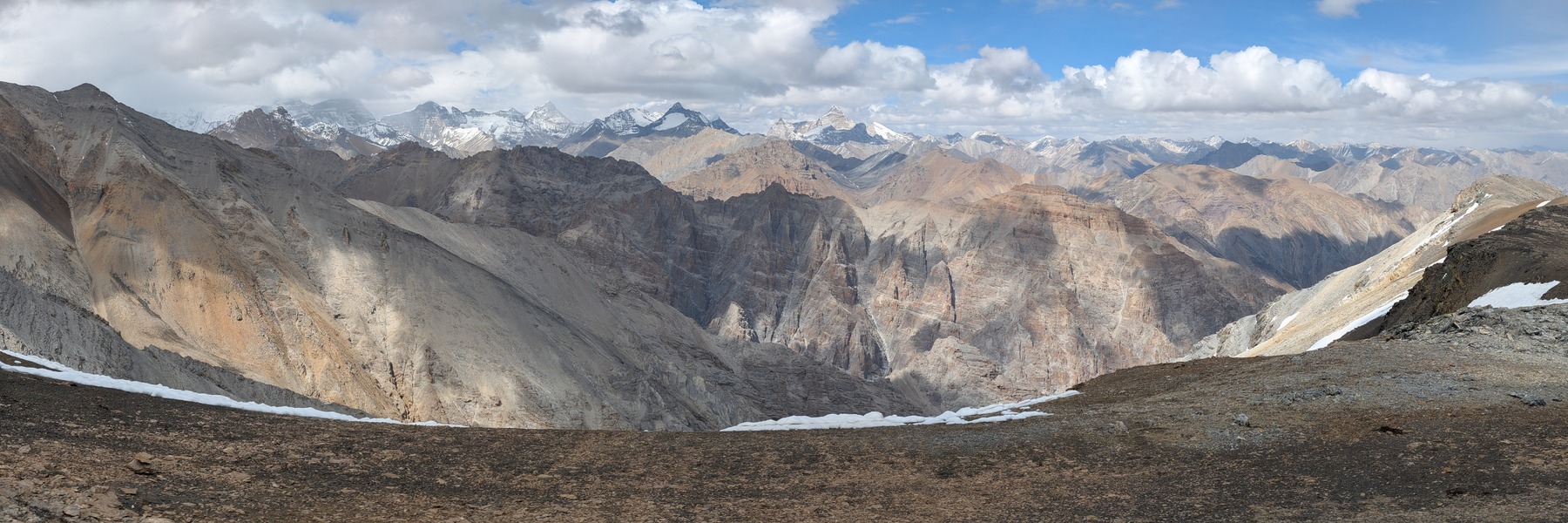
Essential Information
Best Time To Visit
Nepal has two primary trekking seasons: pre-monsoon (March to early June) and post-monsoon (October to November). Both offer excellent weather and conditions for trekking.
Pre-Monsoon March – Early June
This season is a great time of year to trek in Nepal, as the weather is stable, rainfall is rare, and the skies are generally clear. The skies are clearest early in this period (February and March), with haze building up as the season progresses and the monsoon nears. However, earlier in the season, snow conditions can be more challenging; heavy snowfall is a possibility and can linger at higher elevations for a long period.
Post-Monsoon October – November
October and November are the absolute peak months for trekking in Nepal, when tourism surges and the trails are at their busiest. The monsoon normally begins to taper off in late September or early October. Thanks to the extensive preceding rainfall, October is one of the greenest months to visit, with trees and wildflowers in full bloom.
As the season progresses into November, temperatures drop significantly as winter approaches. Although it is generally a very dry period, random storms can hit, causing heavy snowfall and making trekking conditions very challenging.
Nepali Cuisine
Nepali food largely consists of a combination of traditional Nepali cuisine (such as thalis and dals) and Tibetan dishes, which are traditional meals in Sherpa families, including momos (steamed dumplings), thukpa (noodle soup), and chow mein.
The cuisine in the Himalayas largely depends on the region you are trekking through, though one staple you can find absolutely everywhere is Dal Bhat. This is a traditional thali set consisting of lentil soup (dal), rice (bhat), potato curry, and vegetables—usually served with unlimited refills.
Otherwise, in most regions, you can usually find chow mein, thukpa (or simple ramen), fried rice, and momos. If you’re trekking through a tourist hotspot like the Annapurna Circuit or the Everest Base Camp (EBC) Trek, your options will expand to almost everything you can imagine, including wood-fired pizzas, burgers, and carrot cake.
- Dal Bhat The quintessential high-altitude fuel. Lentil soup, rice, potato curry, and vegetables with endless refills.
- Tibetan Classics Steamed momos, warming thukpa noodle soups, and chow mein—Sherpa family staples.
- Teahouse Fare Quick fried rice, simple ramen, and potato dishes available across almost every remote mountain village.
- Trail Hotspots Major routes feature diverse international options, from freshly baked carrot cake to wood-fired pizza.
Culture & Peoples
Nepal boasts a rich and diverse combination of vibrant cultures shaped by its much larger neighbors, Tibet to the north and India to the south, blending Buddhism and Hinduism within this small country.
Geographically, the Himalayas act as a natural barrier between Hinduism and Buddhism. Most of Nepal’s mountainous regions are occupied by the Sherpa people, who follow Tibetan Buddhism. Outside the mountains, in major cities like Pokhara and Kathmandu, as well as the Terai region, Hinduism is the dominant religion due to the cultural influence of bordering Indian states.
The Sherpa People
The Sherpa are a native Tibetan population that originally occupied the high regions along the Tibetan Plateau. Between the 13th and 16th centuries, large populations of Sherpas migrated south to escape religious conflict and Mongolian invasions.
Today, significant Sherpa populations reside in Nepal—particularly in the eastern Khumbu (Everest) region—with smaller minorities living in Bhutan, Sikkim (Northeast India), and Ladakh (Northwest India).
Visas & Permits
Visas
Most visitors from outside South Asia require a visa to enter Nepal. Citizens of most countries in Europe, the USA, Canada, Australia, and New Zealand can obtain a visa on arrival at most airports and major land borders.
You can also extend your visa at immigration offices in major cities like Pokhara and Kathmandu for an additional $3 per day. However, tourists are typically required to extend their stay for a minimum of 15 days ($45 total).
Permits & Fees
Permits are a crucial part of trekking in Nepal, as they are required for almost every trekking region in the country. The process for obtaining them largely depends on where you plan to go:
- Non-Restricted Areas (Khumbu, Annapurna, etc.): You can apply for permits on your own in major cities or, depending on the region, upon arrival at designated checkpoints. These permits typically cost 3,000 Nepalese Rupees (approx. $20 USD).
- Restricted Areas (Manaslu, Kanchenjunga, Upper Mustang, Upper Dolpo): Permits are more expensive and must be arranged through a licensed trekking agency. You are also required to hire a licensed Nepalese guide to obtain these permits.
- National Park Fees: For trekkers passing through national parks, there is an additional entrance fee, which is usually 3,000 NPR (approx. $20 USD).
Safety
Overall, Nepal is considered a very safe country for travelers.
Large cities like Kathmandu and Pokhara are generally secure. While there have occasionally been periods of political unrest leading to protests, these situations typically settle down quickly. As long as you exercise general common sense, the cities are very safe to explore.
Mountain Safety
Nepal’s mountainous regions are also highly safe for trekking, boasting friendly and hospitable locals alongside good trekking infrastructure.
Language
Nepali is the only recognized, fully official language in Nepal. It is the primary language for 45% of the population and a secondary language for another 46%. Besides Nepali, many regional languages exist, such as Maithili and Bhojpuri, which are mostly spoken in the southern Terai region. Sherpa is also widely spoken by the Tibetan-descended Sherpa people who occupy the Nepalese Himalayas.
The level of English spoken in Nepal depends heavily on a region's exposure to tourism. In popular trekking areas like Khumbu (Everest) and Annapurna, as well as the tourist districts of Pokhara and Kathmandu, most locals speak good English, or at least enough to get by. However, outside of these regional hotspots, English is rarely spoken, which can make communication more challenging.
Currency & Cash
Official currency: Nepalese Rupee (NPR)
Exchange rate: Approx. $1 USD = 155 NPR
USD is also widely accepted, particularly for paying guides, porters, and travel agencies. However, when paying for tea houses, cafes, and restaurants in the mountains, the Nepalese Rupee is generally preferred.
Cash is King in Nepal
In major cities like Kathmandu and Pokhara, card payments are sometimes accepted, but many restaurants, cafes, and hotels still prefer cash. If they do accept cards, they often charge high transaction fees. It is best to withdraw rupees from an ATM before heading into the mountains.
In the mountains, card payments are almost entirely nonexistent, making it absolutely necessary to withdraw sufficient cash for the duration of your trek before you leave. While some major settlements on popular routes (such as Lukla or Namche Bazaar) have functioning ATMs, you should never rely on them completely, as they are sparse and frequently out of service.
Ecology
Nepal contains dramatic vertical ecological zones within a compact geographic span, transitioning rapidly from subtropical lowlands in the Terai up through temperate oak and rhododendron forests to alpine tundra and glacial valleys.
These protected habitats harbor rare high-altitude wildlife, including the endangered Snow Leopard, Red Panda, Blue Sheep (Bharal), Himalayan Tahr, Musk Deer, and Nepal's national bird, the Danphe (Himalayan Monal).
Environmental Stewardship
Fragile high-altitude ecosystems face severe pressure from climate impact and waste. Following strict Leave No Trace principles and utilizing water purification methods rather than purchasing single-use plastic water bottles are essential practices for all mountain travelers.
History
For centuries, Nepal served as a crucial mountain trade corridor connecting the Tibetan Plateau with the Indian subcontinent. High mountain passes facilitated the exchange of salt, wool, food, and spiritual traditions across Central and South Asia.
The nation was unified in 1768 by King Prithvi Narayan Shah of the Gorkha Kingdom. Nepal maintained its sovereign independence throughout the colonial period in South Asia, relying on mountain geography, skilled diplomacy, and the formidable defense of Gurkha soldiers.
Modern mountain exploration reached a milestone in 1953 with the historic first ascent of Mt. Everest by Tenzing Norgay Sherpa and Sir Edmund Hillary. Today, Nepal operates as a Federal Democratic Republic and remains the global hub for Himalayan expeditioning.
Women Travelers
Nepal is widely recognized as one of the safest and most hospitable destinations in South Asia for solo female travelers and female group trekkers. Mountain communities treat foreign guests with great warmth, respect, and hospitality.
While urban centers like Kathmandu and Pokhara are progressive and modernizing rapidly, traditional customs remain active in rural mountain villages. Wearing modest clothing that covers shoulders and knees when visiting village homes, temples, and Buddhist monasteries is polite and respected.
Female Guiding in the Himalayas
Nepal has seen a significant rise in local female mountain guides, teahouse owners, and conservation officers across the country, fostering an increasingly supportive environment for female adventurers.
Upcoming Expeditions
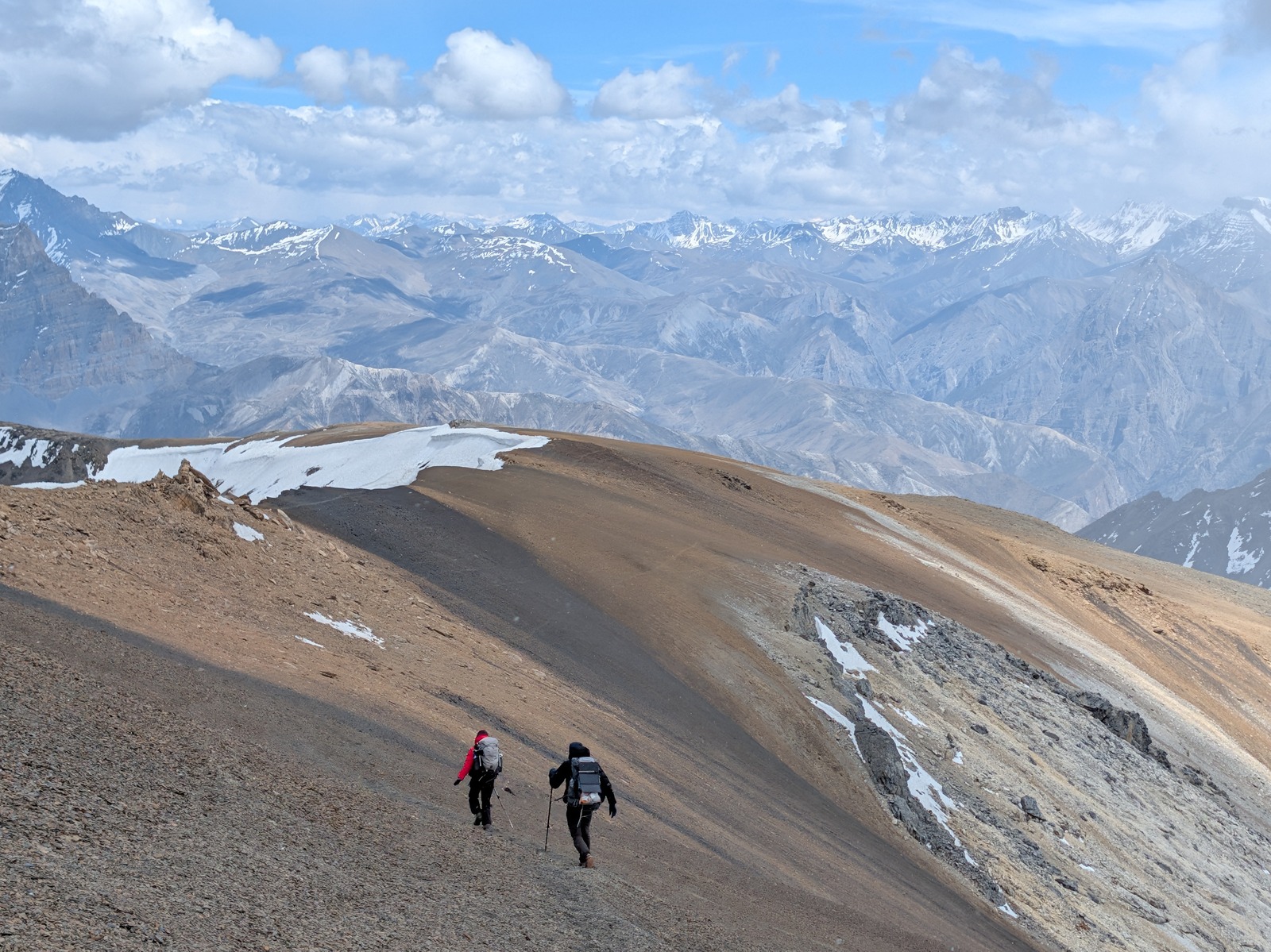
Frequently Asked Questions
Short answer: Yes. Nepal is one of the safest places in the world to hike. The locals are incredibly friendly and exhibit genuine mountain hospitality. The trails are generally well-tracked and maintained, making it very difficult to get lost. If you ever do need assistance, the local communities are always willing to lend a hand.
In popular regions like Everest, Annapurna, and Manaslu, the trails are frequently maintained and in excellent condition.
In the more off-beat regions, the trails are rougher but still quite well-kept overall. This is because they aren't just tourist paths; they are vital infrastructure used daily by locals to graze yaks, visit neighboring villages, and deliver supplies to remote communities. You can expect steeper, more challenging sections when you leave the main tourist circuits, but compared to other mountainous countries, the trail conditions are remarkable.
This largely depends on where you are.
If you are on a popular circuit like Everest or Annapurna, you can find almost anything, from Dal Bhat (a traditional Nepali meal of lentils, rice, and curries) to pizza, chow mein, and even burgers.
In the remote regions, expect to eat Dal Bhat almost exclusively. It is the national dish, and many locals rely on it twice a day as their primary source of nutrition. You can also usually find simple plates of chow mein or instant ramen. Regardless of where you are, the beauty of the teahouse network is that you can hike almost anywhere in Nepal without having to carry a heavy load of your own food.
It is the combination of deeply rooted Tibetan Buddhist culture, mountains of an unmatched global scale, and immense geographical diversity. Nepal packs just about every landscape imaginable into a remarkably small area, from dense, sub-tropical rainforests to barren, high-altitude deserts, all sitting beneath the truly alpine 8,000-meter giants.
It is a bit of a grey area, and the answer depends entirely on where you plan to trek.
In 2023, the national government announced a "solo trekking ban" requiring all foreigners to hire a licensed guide. However, in reality, this is rarely enforced in the major trekking hubs. In popular regions like Annapurna, Everest (Khumbu), and Langtang, independent trekkers are still common, and local checkpoint officials generally only check for your standard entry permits (like the ACAP or Sagarmatha National Park permit) rather than enforcing the guide mandate.
However, for the off-beat and "Restricted Areas" where we operate, including Kanchenjunga, Upper Dolpo, Nar-Phu, Manaslu, and Mustang, the rules are completely uncompromising. Due to their proximity to the Tibetan and Sikkim borders, you are legally required to trek with a licensed guide. You must also hold special Restricted Area Permits, which can only be processed and obtained through a registered trekking agency. In these regions, there is no bypassing the checkpoints without a guide.
Need More Advice?
Not Answered Your Question? Check out our FAQ's page or contact us below!