So, you made it to Central Asia. If you’ve just flown in, my guess is you’re currently finding your feet in either Almaty or Bishkek.
Karakol, despite its relatively small size, has firmly established itself as one of the major Central Asian tourism and trekking hubs. At some point on your travels, you’ll likely be looking to make your way there.
If that’s the case, you’re in the right place. I’ve put together a practical guide covering transportation options, border logistics, and a few side quests along the way. Keep reading, vagabonds!
Almaty to Karakol
The Direct Bus
With the introduction of the new Almaty-Karakol direct bus through the Kegen border post in 2025, this journey is now much easier and more affordable.
- Schedule: As of June 2026, buses depart once daily in each direction.
- Times: Departs Almaty at 10:00 AM and usually arrives in Karakol between 5:00 PM - 6:00 PM.
- Locations: Leaves from Sayran Bus Terminal (Almaty) and arrives at the Northern Bus Station (Karakol).
- Cost: 9,250 Kazakh Tenge (from Almaty) or 1,600 Kyrgyz Som (from Karakol). Both equal roughly $19 USD.
How to book: If you’re starting in Almaty, you can technically book online via the Sayran Bus Terminal website. However, processing payments with international cards can be notoriously buggy. Your best bet is to just show up at the Sayran Terminal a couple of hours before departure and book in person at the ticket counter.
If you’re traveling from Karakol to Almaty, online booking isn't an option. You must book in person at the Karakol Bus Station.
The Journey: The buses are comfortable and rarely run at full capacity. It’s one of the most scenic intercity routes in Central Asia, crossing the edge of the Kazakh steppe and climbing over the mountainous Kegen Region. The roads on the Kazakhstan side (about two-thirds of the trip) are excellent. The Kyrgyzstan side is a bit bumpier, but still highly manageable.
The Kegen Border Crossing
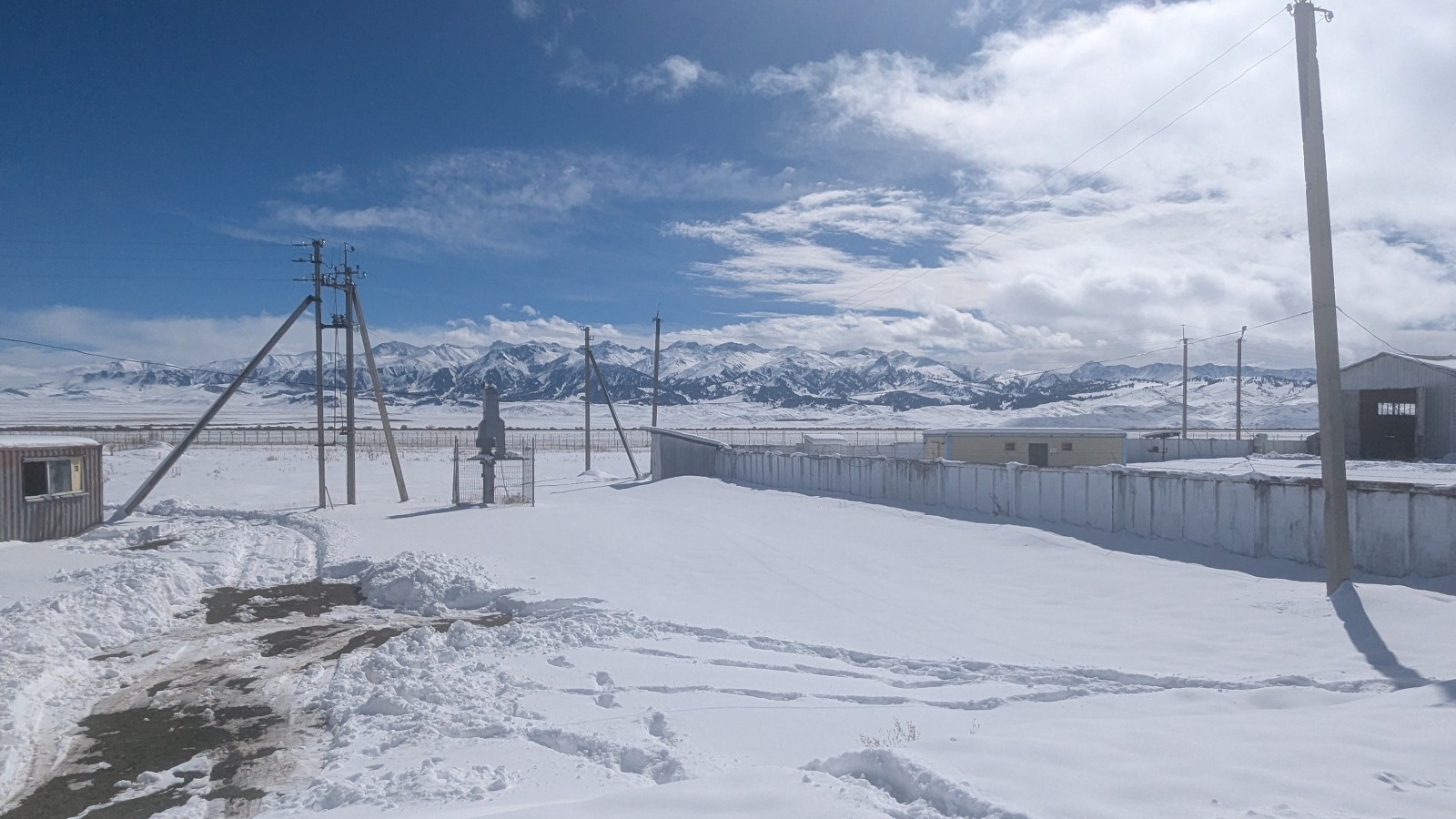
The Kegen border is as smooth as land borders get in Central Asia. It's so quiet you barely realize you’ve changed countries.
Pro-tip for the bus: You cannot stay on the bus while it clears customs. You will need to grab all your personal luggage and walk about 200 meters through the passport and customs terminals on foot. The bus will meet you on the other side. You'll often clear immigration faster than the bus clears vehicular customs, so don't panic if you have to wait a bit.
Visa Logistics
Citizens of the EU, UK, US, Australia, and several others get visa-free entry.
- Kazakhstan: 30 days visa-free (resets upon re-entry, but max 90 days within a 180-day period).
- Kyrgyzstan: 30 days visa-free. Note: As of recently, this is capped at 30 days within a 60-day period.
Important Note:
Because the Kegen border post is located essentially in the middle of nowhere, there are zero ATMs or official currency exchange offices at the crossing.
If you are relying on shared taxis, hitchhiking, or need to pay for onward transport once you cross, you will be completely stuck if you don't have the correct local currency. I highly recommend exchanging your money beforehand in Almaty (for Kyrgyz Som) or in Karakol (for Kazakh Tenge). Sort this out before you leave the city and it will save you a massive amount of stress!
Jeep Transfer Tours
It’s no secret that the route from Almaty to Karakol is packed with hotspots, including Kolsai & Kaindy Lakes, Charyn Canyon, and Altyn Emel National Park.
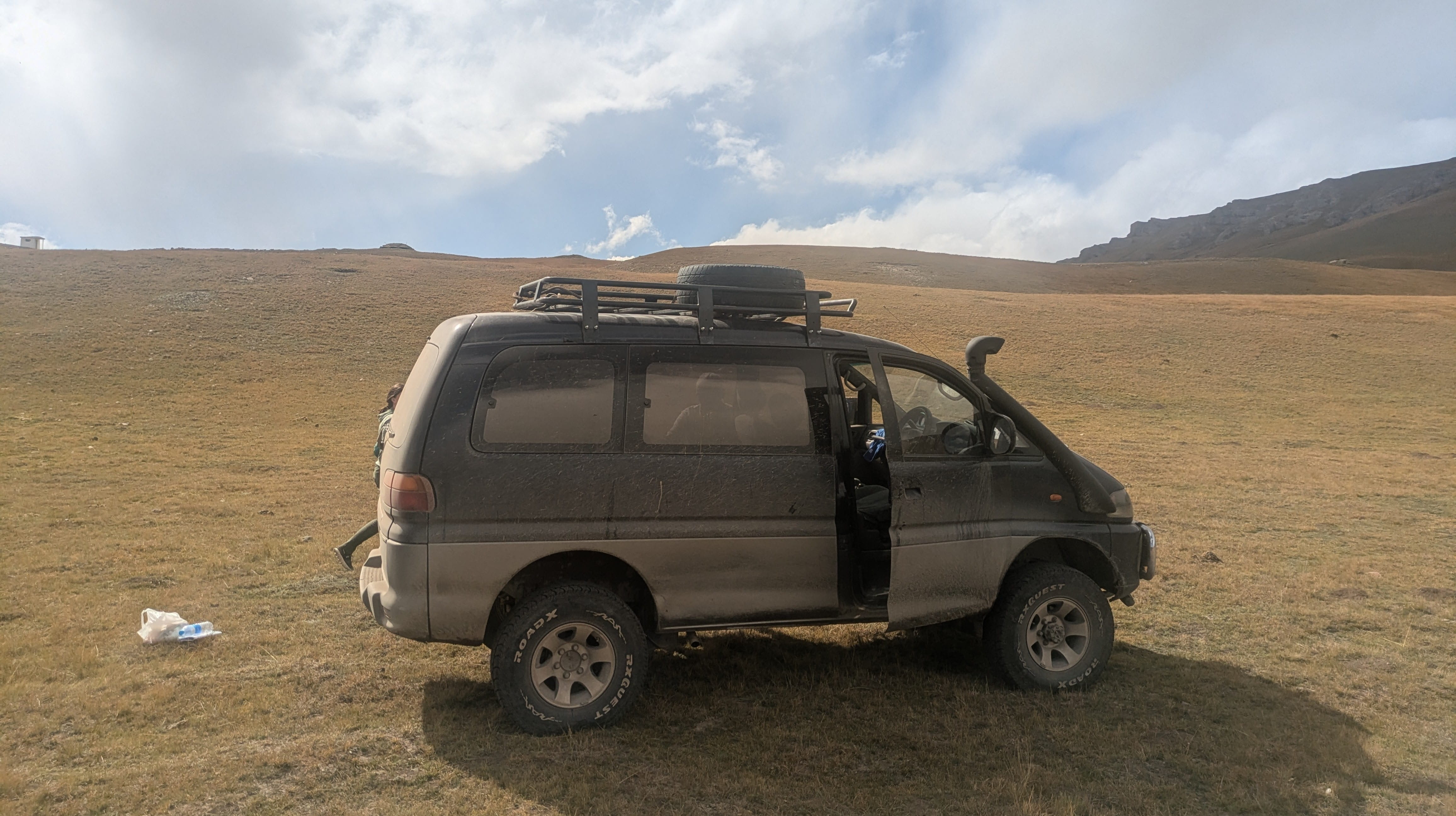
Jeep tours are a popular choice if you have a bit more budget and want to turn the transit day into a proper adventure. Prices range from $300-$500 USD (for 1 or 2 days), making it quite affordable if you split the cost with three or four other travelers.
I highly recommend Snow Leopard Hostel's Jeep Tours. Jalil speaks fluent English, has years of experience in the local tourism industry, and offers great 1- or 2-day transfer options. You can check out his Almaty-Karakol Transfer details here.
Hitchhiking
I’ve done this route, and honestly, it requires patience. Getting out of Almaty is the hardest part, take public buses until you are deep enough into rural Kazakhstan to get a clean ride.
Traffic after the Kegen border drops significantly. I once waited five hours and walked 10km just to catch a ride to Karakol. It’s a brilliant adventure, but it took me two full days. Plan accordingly and bring camping gear and food!
Bishkek to Karakol
Getting from Bishkek to Karakol is a classic Central Asian rite of passage: you’ll be taking a Marshrutka (a Soviet-style sprinter mini-bus).
Tip: To pronounce it correctly, really roll the "r".
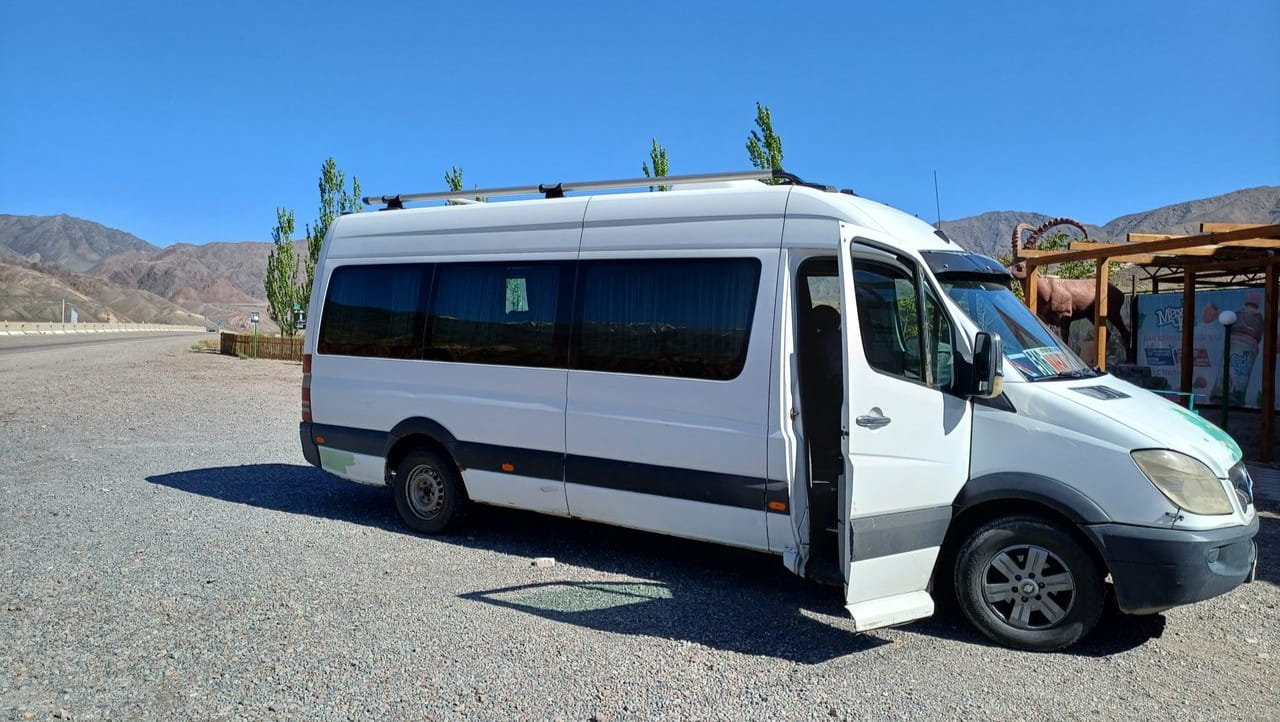
The Marshrutka
- Schedule: Departures run multiple times a day in both directions, from 6:00 AM until roughly 4:00 PM - 5:00 PM.
- Duration: 6-7 hours.
- Cost: 500-600 Kyrgyz Som. Do not pay more than this; if a driver quotes higher, they are just trying to pocket the difference. Negotiate!
Where to catch it in Bishkek: You need to go to the New Bus Station, located north of the city just outside the village of Leninskoye. You can take the green city bus (Number 13) from the center directly to the station. Warning: Traffic on this route can be an absolute nightmare. Leave early. I’ve previously hopped off the city bus a few kilometers early and walked, beating the bus to the station.
Where you arrive in Karakol: You’ll be dropped at the Northern Bus Station (Avtovokzal), a couple of kilometers north of the center. From there, jump on a domestic city marshrutka (Number 109 or 111) to get into town. If you arrive after dark when the local buses stop running, use the Yandex Go app (the Uber of Central Asia) to catch a cheap taxi to your accommodation.
North Shore vs. South Shore (Issyk-Kul)
Direct marshrutkas from Bishkek to Karakol only take the North Shore route.
If you want to travel via the wilder, more scenic South Shore, you'll need to break up the trip. Catch a marshrutka to Bokonbayevo first. From there, you can explore iconic spots like Skazka (Fairy Tale) Canyon, Djeti-Oguz, and the Barskoon Waterfalls, before flagging down a second marshrutka to finish the journey to Karakol.
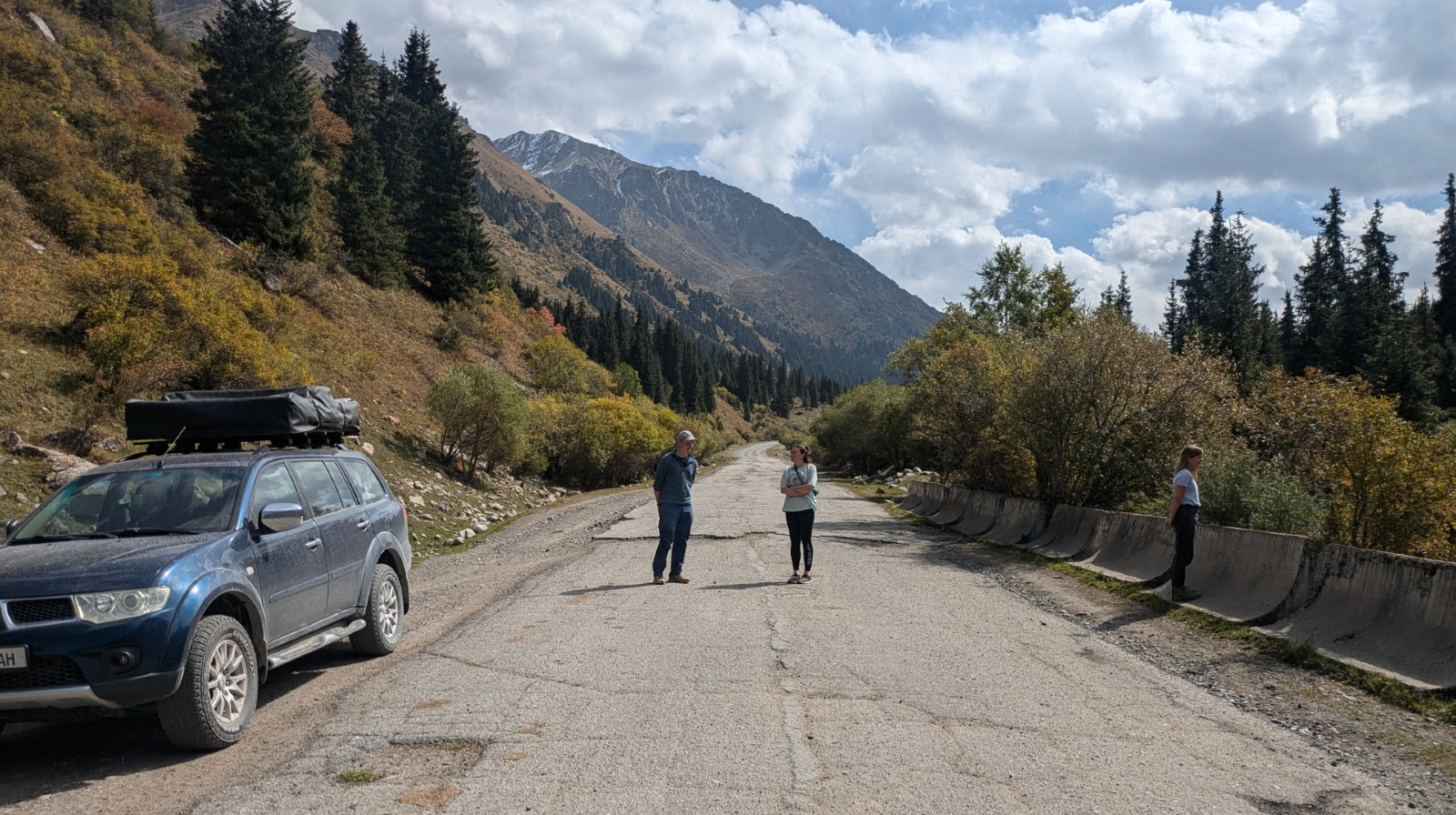
Alternative Options from Bishkek
If six hours squeezed into a minibus next to a Bishkek Babushka isn't your speed, you have two upgrades available:
- Shared Taxis: Often found at the New Bus Station. You pay for your seat (1,000-1,500 Som) and leave when the car is full. It's significantly faster and more comfortable than a marshrutka, though you might wait longer for it to fill up.
- Private Taxis: The smoothest option. Expect to pay 10,000 to 15,000 Som ($120-$170 USD) for the entire vehicle. Jalil from Snow Leopard Hostel also arranges direct one-way transfers on this route for around $170.
The ‘Elusive’ Night Coach (GoBus)
I’ll be honest: I’ve never actually taken this bus myself, but it has quickly become one of the worst-kept secrets for travelers wanting to maximize their time.
Operating under GoBus, this isn’t a cramped marshrutka; it’s a proper 50-seater classic coach (think Setra style) with giant undercarriage compartments to swallow up heavy backpacks and trekking gear.
- Schedule: Departs at 11:00 PM every night.
- Duration: Arrives in Karakol around 5:00 AM to 6:00 AM the next morning.
- Cost: 750 Kyrgyz Som (about $9 USD) per person.
- Departure Point: It leaves from the dead center of Bishkek, usually near Pobeda Square (the Eternal Flame) at the intersection of Ibraimov and Frunze streets.
Why is it brilliant?
If you are traveling in the peak of summer, the daytime heat in the Chuy Valley can easily push past 40°C. By taking the night coach, you skip the heat entirely, avoid Bishkek's notorious evening traffic jams, and hopefully sleep through the 6-hour drive.
How to book:
You can book your seats ahead of time via the GoBus app or website. Just be careful to ensure the ticket explicitly says it’s operated by GoBus and departs from the city center, as the app sometimes lists regional station marshrutkas as well.
One quick warning: Because you arrive in Karakol at 6:00 AM, your guesthouse almost certainly won't let you check in yet. Your best bet is to grab a cheap Yandex taxi straight from the bus stop to a spot like Sierra Coffee, where you can grab a hot breakfast and use the Wi-Fi until the town wakes up.
Flying to Karakol
As of 2025, Karakol International Airport (IKU) has officially reopened for domestic passenger flights. This is massive news for travelers, particularly if you are trying to link southern Kyrgyzstan (like the Pamirs) with the north without losing days to overland travel.
Currently, the flights are operated exclusively by Asman Airlines, Kyrgyzstan's new state-owned domestic carrier.
- Bishkek to Karakol: Regular flights operate between Manas International Airport (Bishkek) and Karakol. Tickets typically run around 4,000 Kyrgyz Som (approx. $45 USD), turning a 6-hour marshrutka ride into a 1-hour hop.
- Osh to Karakol: They also operate direct flights between Osh and Karakol 2 to 3 times a week for roughly 5,000 Kyrgyz Som (approx. $58 USD).
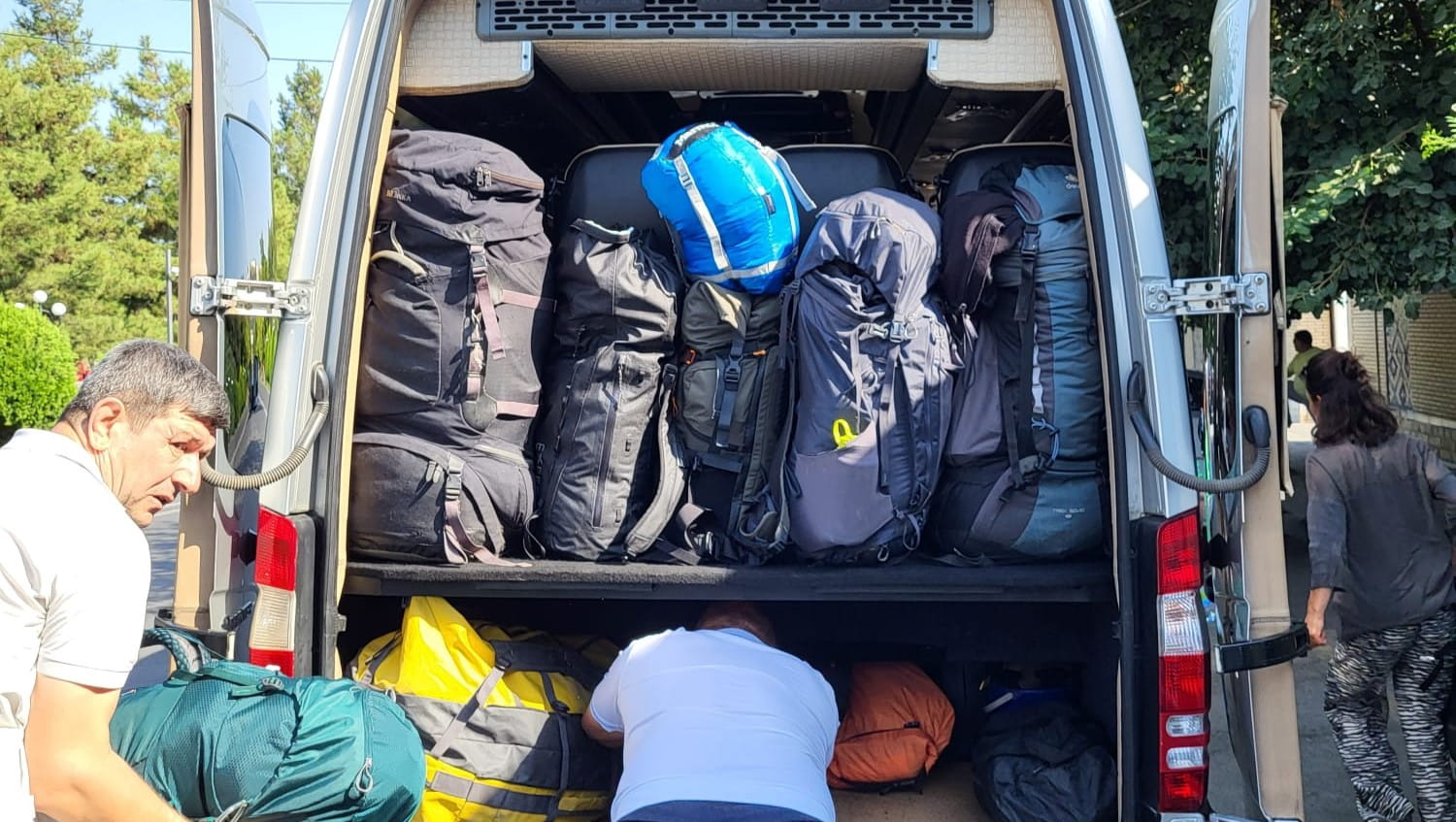
Getting to Karakol from Other Regions of Kyrgyzstan
Naryn to Karakol
If you've been exploring the deep south around Kel-Suu or Tash-Rabat, you'll likely be routing back through Naryn.
- Schedule: There are generally two direct marshrutkas running daily from Naryn’s main bus station to Karakol. They usually depart between 8:30 AM and 9:30 AM, but schedule discipline is loose here. Show up early to secure a seat!
- Duration: Between 5 to 7 hours.
- Cost: Around 600-700 Kyrgyz Som.
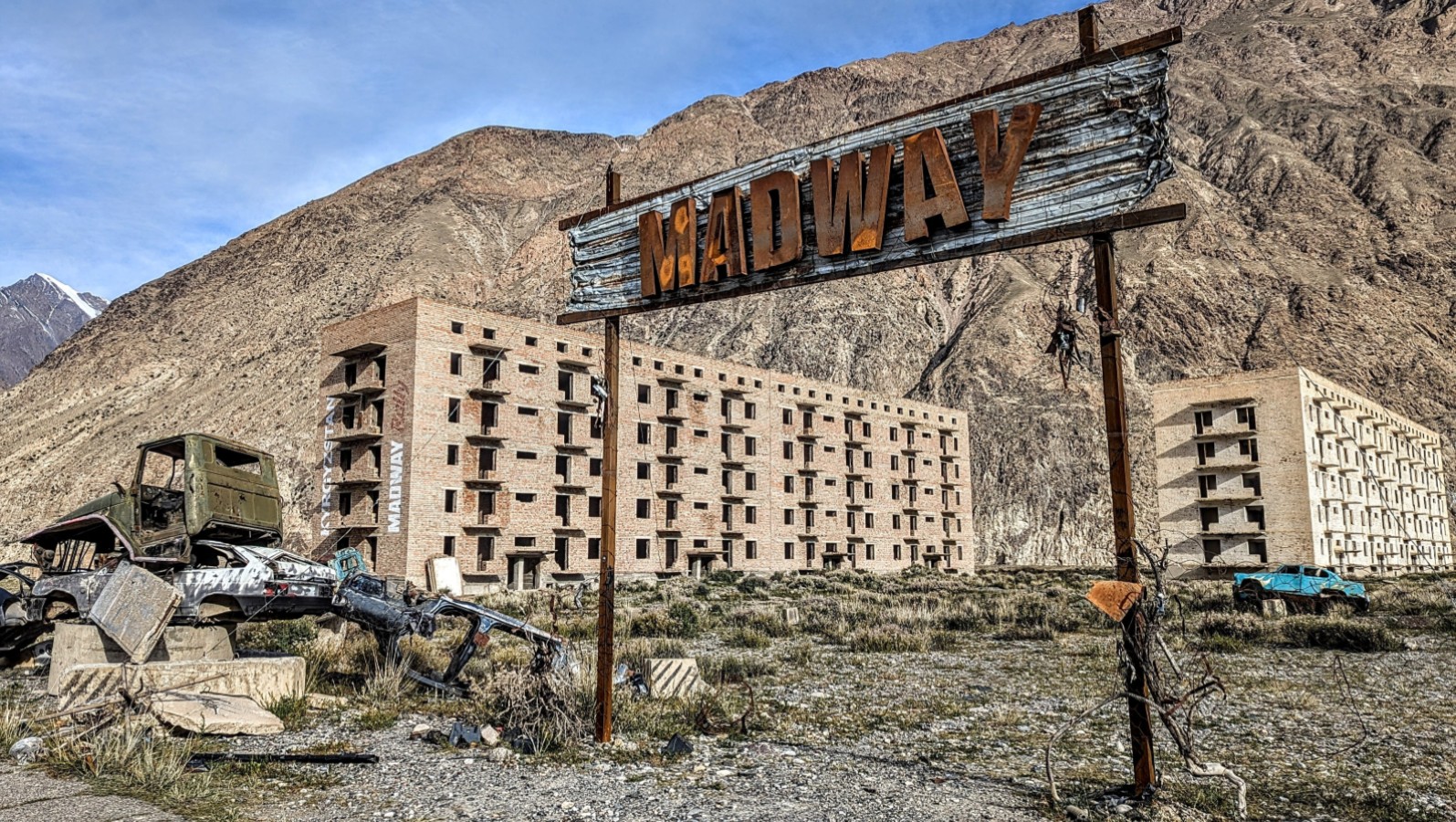
Bokonbayevo to Karakol
Bokonbayevo serves as the unofficial capital of Issyk-Kul’s wilder South Shore. Because you are already halfway around the lake, getting to Karakol from here is a breeze.
- Duration: Roughly 2 to 2.5 hours.
- Marshrutkas: These pass through regularly during the day. Expect to pay around 250 Som.
- Shared Taxis: A faster, slightly more comfortable option that leaves when full. A seat will cost you about 500 Som.
Osh to Karakol
I am unaware of any shared taxis or marshrutkas that run directly from Osh to Karakol. To do it overland, you essentially have to route all the way north through Bishkek—unless you are embarking on a multi-day, backcountry 4x4 adventure through the Tien Shan.
This leaves you with two realistic options:
- Fly Direct (Highly Recommended): As mentioned earlier, taking the new Asman Airlines direct flight from Osh to Karakol is by far the most stress-free option. It costs roughly 5,000 Som and turns a 2-day overland slog into a 1-hour hop.
- Fly to Bishkek, then Drive: If the direct Osh-Karakol flight schedule doesn't align with your travel dates, you can catch one of the many daily flights from Osh to Bishkek (4,000-5,000 Som), and then catch a marshrutka or shared taxi from Bishkek to Karakol.
Balykchy to Karakol
If you are unlucky enough to find yourself stuck in Balykchy—a dusty port town on the western edge of Issyk-Kul (whose name literally translates to “fisherman” in Kyrgyz)—there is a glimmer of hope. Balykchy is the primary gateway to the lake and connects very efficiently with Karakol.
- Schedule: You’ll find multiple marshrutkas passing through on a daily basis.
- Duration: The journey takes around 4 hours.
- Cost: 350-400 Som for a seat.
The Unwritten Rules of Kyrgyz Marshrutkas
When your time comes to finally hop inside these legendary Soviet Sprinter wagons, there are a few unspoken rules and cultural norms you need to be aware of to ensure a smooth ride.
1. The Golden Rule: Respect Your Elders (Babushkas & Dedushkas)
While yielding your seat to the elderly is polite practice in the West, it is practically a blood bound law in Kyrgyzstan. If a Babushka (grandmother) or Dedushka (grandfather) boards a crowded town bus, you stand up immediately.
The consequences of ignoring this rule are swift and loud. I once watched an elderly Kyrgyz woman fiercely swing her handbag at a young local man who refused to move. Stand up, pay your respects, and avoid the wrath of the babushkas.
Note: On long intercity journeys (like Bishkek to Karakol), seats are assigned when you buy your ticket, and the driver won't overload the bus with standing passengers. This unwritten law mostly applies to short-distance town routes where people cram into the aisles.
2. Pass the Cash Down the Line
During peak hours, local city marshrutkas become tightly packed, completely blocking the center aisle. If you are stuck in the back of the bus, reaching the driver to pay is physically impossible.
Instead, tap the person in front of you on the shoulder and hand them your money. The locals will seamlessly pass your cash forward from person to person until it reaches the driver. If your change needs to come back, the reverse happens, the bills will get passed hand-to-hand back down the aisle until they find you. It is a highly efficient, community-driven system. Just conform and pass it along.
3. Break Your Big Bills First
This is especially critical on short, inexpensive city routes where fares are minimal. Marshrutka drivers are managing heavy city traffic, shifting gears, and calculating change simultaneously. They can be short-tempered at the best of times.
Handing a driver a 1,000 Som note for a 40 Som fare is a guaranteed way to get yelled at in Russian or Kyrgyz. Try to keep small coins and low-denomination notes specifically for transit; it keeps the line moving and keeps the driver happy.
4. You Can Hail a Ride Anywhere
While major cities like Bishkek have official bus stops, regional marshrutkas operate on a much more flexible system. If you see your bus number approaching on a rural road or town street, you can usually stick your hand out and wave them down anywhere it is safe for them to pull over.
Just make your signal clear and early so the driver has enough time to brake. If the bus is already completely full, they might flash their lights and drive past, but don't sweat it, just keep your hand ready for the next one.
Final Remarks
Hopefully, after reading this, you’ve got a clearer picture of how to get to Karakol from most of the major settlements in Kyrgyzstan (and Almaty, of course).
If there is anything else you are unsure of, or if you think I might have missed something, feel free to reach out to us. We're always happy to help fellow vagabonds sort out their travel plans!